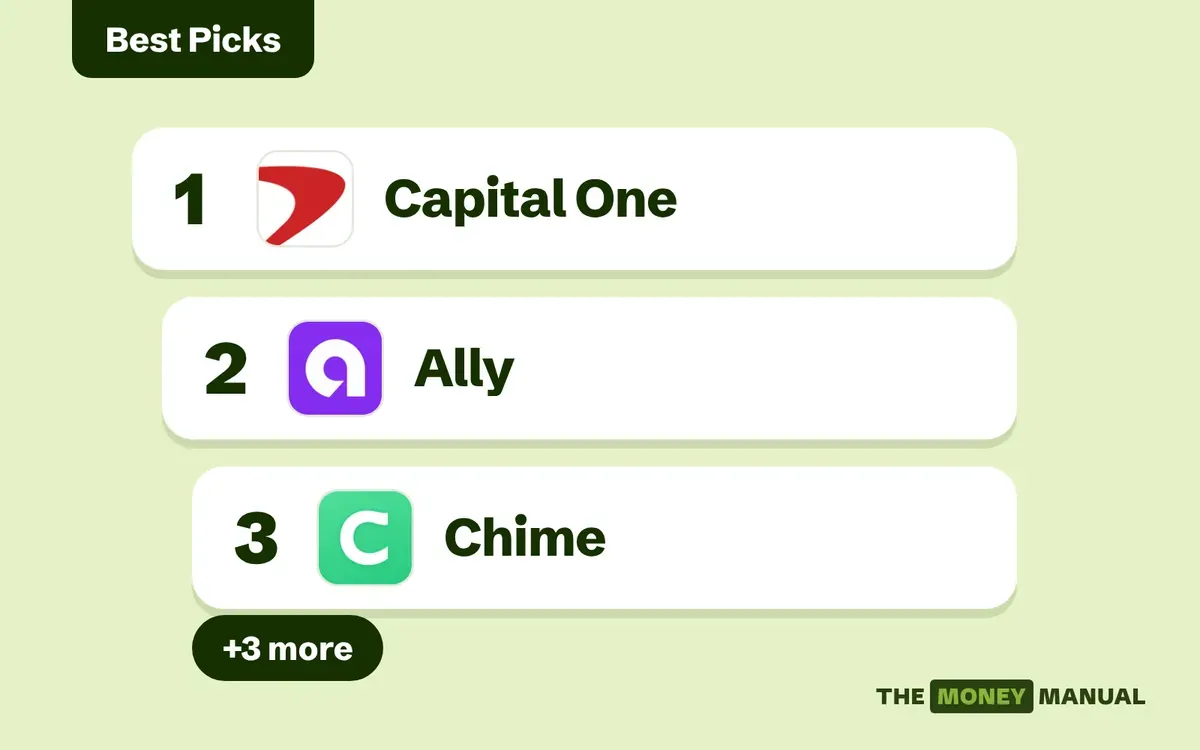
Our picks at a glance
 Capital OneReduce the maintenance hurdle
 AllyA straightforward direct-bank model
 ChimeApp-based, with specific eligibility
 Chase Secure BankingAn online route with a branch alternative
 AlliantMembership may be easier than you expect
 PenFedLow recurring cost with an opening deposit
Jump to any pick for the full assessment, costs and conditions.
What easy should mean
An account can be easy to apply for but difficult to use. If you cannot deposit your income, avoid the monthly fee or access support, the short form did not solve the problem.
We compared official opening, fee and eligibility information checked October 30, 2026. The shortlist is organized by the obstacle it may reduce: opening funding, recurring fees, membership access or a path to human assistance. We do not claim approval-rate data, timed application tests or guaranteed acceptance.
| Candidate | Potentially useful for | Requirement or limitation to check |
|---|---|---|
| Capital One consumer checking | Avoiding a monthly fee and minimum-balance routine | Accepted identification and online eligibility |
| Ally checking | A direct online-bank relationship without opening minimum | Funding access and lack of branch-based cash service |
| Chime checking | App-based checking without monthly maintenance fee | U.S. eligibility, SSN requirements and feature eligibility |
| Chase Secure Banking | No opening deposit, with branch help available | Monthly-fee waiver and age/application channel |
| Alliant checking | A broad membership route | Membership savings, initial funding and identity verification |
| PenFed Free Checking | Credit-union checking without monthly service fee | Membership relationship and $25 opening deposit |
These are candidates to investigate, not a ranked claim that one approves more people than another.
Capital One: reduce the maintenance hurdle
Capital One's banking page describes consumer accounts without monthly fees or minimum balances. That can make ongoing management simpler for someone whose balance is small or variable.
The benefit is not a promise that identity checks are waived. Confirm that the online process accepts your identification and tax-identification situation. If it does not, ask whether another channel or account type is available.
Capital One can also offer physical access in selected locations, but check your area before relying on that backup. The right account should remain manageable after the first deposit, not merely have an appealing application screen.
Ally: a straightforward direct-bank model
Ally's account page lists no account minimums or monthly maintenance fees. That can remove the need to move a large amount simply to begin the relationship.
It is a better fit when your money arrives electronically and you can use online support and transfer methods. It is a weaker fit if the first thing you need is a convenient place to deposit cash or receive specialized in-person help.
Before applying, map the initial funding method and expected availability. A no-minimum account can still place holds on a deposit or require verification before a transfer is usable.
Chime: app-based, with specific eligibility
Chime's FAQ describes eligibility for adult legal U.S. residents with a valid SSN, and its fee page lists no monthly checking maintenance fee. Those are useful facts for an applicant who meets the requirements and wants a mobile account.
Chime is a fintech using partner banks, not a bank itself. Opening checking does not guarantee access to every optional feature. In particular, mobile check deposit depends on eligibility and account activity.
If your first funding source is a paper check, verify that workflow before choosing Chime. If you need a conventional branch or do not meet the stated online eligibility, compare a different provider rather than repeatedly submitting an unsuitable application.
Chase Secure Banking: an online route with a branch alternative
Chase Secure Banking lists no minimum opening deposit and a $4.95 monthly fee unless a waiver applies. The reviewed page provides age and application-channel details, including branch handling for 17-year-old applicants.
It can be worth considering when the absence of opening funding and access to a branch are useful. But a small recurring fee is still a cost if you do not meet the waiver. Evaluate the account beyond a sign-up bonus.
Hypothetical example: Paying $4.95 monthly for a full year costs $59.40. If a no-monthly-fee alternative accepts your documents and supports the same needs, the shorter or more familiar application alone may not justify that cost.
Alliant: membership may be easier than you expect
Alliant's membership page describes a foundation route when an applicant does not qualify through another relationship. Its checking page lists no monthly maintenance or overdraft fees, while the opening process still involves membership and funding requirements.
This is useful for readers who assume a credit union is unavailable because they do not work for a particular employer. Membership eligibility and account approval remain separate, however.
Ask which identification is accepted and how the membership savings requirement works. Do not confuse a small retained membership share with a fee you necessarily lose; read the institution's terms for the actual ownership and withdrawal conditions.
PenFed: low recurring cost with an opening deposit
PenFed Free Checking lists no monthly service fee and a $25 opening deposit. Its membership is established as part of the eligible application process, with the required savings relationship described separately.
For someone who can fund the initial amount, this can be a practical credit-union candidate. If you have no available funding today, a zero-opening-minimum option may be easier to start, provided it fits the rest of your needs.
Check the supported cash, check and transfer routes. An account with no monthly fee can still charge for particular services, and deposit availability can affect when the first payment is possible.
Prepare once instead of applying repeatedly
Gather your legal name, date of birth, current address, accepted government identification and the tax-identification information required by the provider. Have any address evidence and funding-account details ready. For a joint account, the other owner needs their own information and consent.
Enter details consistently with your documents. If your address or name recently changed, resolve the mismatch through the institution's process. Do not provide false information to get through an automated screen.
The account-opening guide explains the full setup, including fees and first transactions. It is more useful than a promise that every account can be opened in five minutes.
If you have been denied before
Ask for the denial notice and the specific reason or reporting company, where applicable. A deposit-account reporting issue, identity mismatch and credit issue are not the same problem. Review and dispute inaccurate information through the proper process.
Consider asking a bank or credit union about an account designed for people rebuilding a deposit relationship. Do not pay a third party that guarantees approval or offers to fabricate documents.
A branch conversation may be more productive than repeatedly submitting the same online application when the obstacle is a document the automated process cannot accept. Easy should mean a workable path, not necessarily an entirely self-service path.
After approval, verify usability
Confirm the account is fully open, the deposit is available, and the card or payment feature you need is activated. Make a small ordinary transfer or payment before moving every bill. Keep the old account funded during the transition.
Use the switch-banks checklist if replacing an existing account. If this is your first account, start with a manageable balance and alerts rather than assuming every optional credit or advance product is required.
Questions people ask
Which account guarantees approval?
None of the accounts here is presented as guaranteed. Institutions must verify identity and apply their eligibility and screening rules. Be skeptical of anyone promising otherwise for a fee.
Can I open an account without an SSN?
Some institutions accept an ITIN or other permitted documentation in particular channels, while others require an SSN for online applications. Confirm the exact provider's accepted documents before applying.
Does no opening minimum mean no fees?
No. Opening funding, ongoing balance requirements and service charges are different. Compare all three, especially if your balance will be small.
Will I receive a debit card immediately?
Not necessarily. Digital-card access and physical delivery vary, and approval or verification can take time. Do not plan an urgent payment around a card that has not been issued and activated.
Is a credit union harder to join?
Not always. Some have broadly accessible membership routes. The extra membership step may be simple, but it still needs to be completed and does not guarantee account approval.