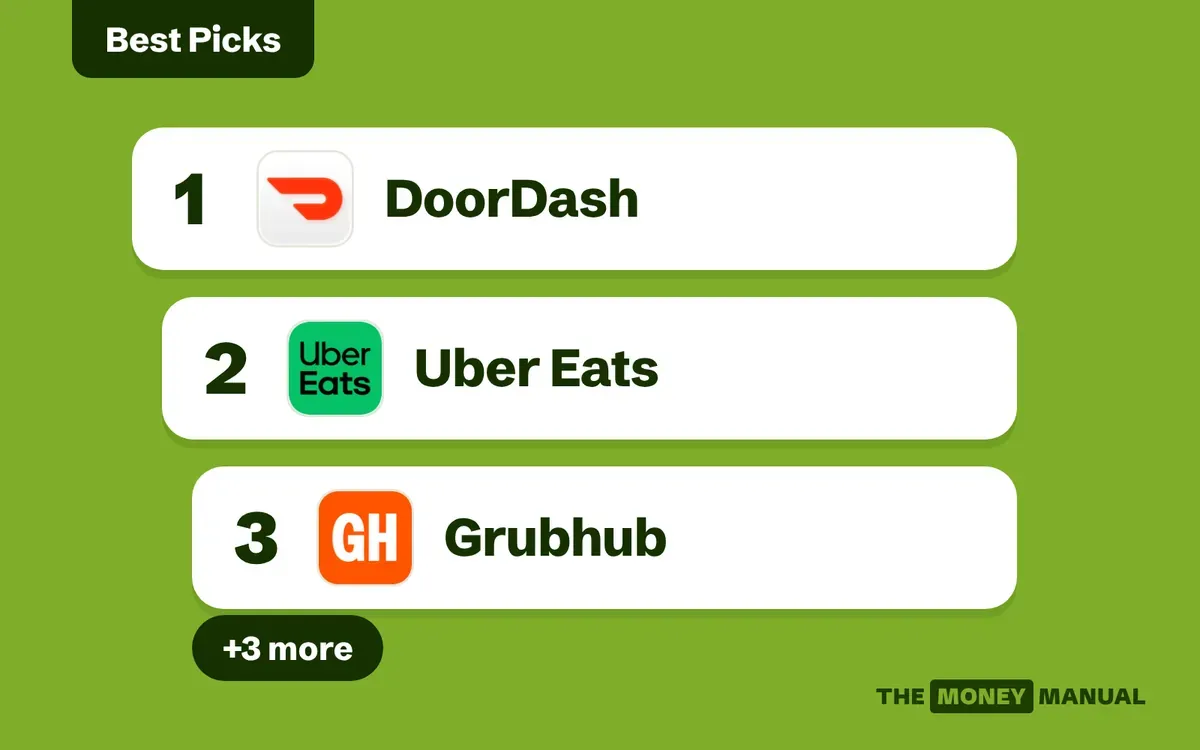
Our picks at a glance
 DoorDashStart by understanding the pay mode
 Uber EatsCheck your actual transport option
 GrubhubEvaluate the block schedule
 InstacartAssess the full batch
 ShiptUnderstand the service expectation
 Amazon FlexInclude the whole route
Jump to any pick for the full assessment, costs and conditions.
Six candidates and the work they require
| Platform | Core work model | Useful fit | Main hidden time |
|---|---|---|---|
| DoorDash | Delivery offers, with different earning modes where available | Short sessions and varied deliveries | Restaurant waits and repositioning |
| Uber Eats | Delivery requests with supported transport modes | Drivers or eligible bike couriers | Pickup and return travel |
| Grubhub | Delivery with block scheduling | Planned work periods | Waiting between orders |
| Instacart | Shopping, delivery, or combined batches | Accurate efficient shoppers | Finding items and substitutions |
| Shipt | Personal shopping and delivery | Customer-service-oriented work | Shopping and delivery windows |
| Amazon Flex | Scheduled delivery blocks | Longer defined work periods | Station travel and route completion |
We reviewed official driver and shopper pages. We did not establish a nationally representative earnings ranking. Local rules and account-specific offers can change the comparison.
DoorDash: start by understanding the pay mode
DoorDash's official page distinguishes earning per offer from earning by time where available. The latter refers to active delivery time under its terms, not an unconditional wage for every minute online.
Before accepting work, consider the pickup, delivery distance, merchant, destination, and likely next step. A short delivery can still take a long time if the order is not ready.
DoorDash can be worth trying if local demand aligns with your available hours and you already have suitable transport. Check age and vehicle requirements for your location rather than assuming one national rule.
Uber Eats: check your actual transport option
Uber describes delivery by car, scooter, bike, or on foot, depending on the opportunity and location. It displays offer information before acceptance and provides different payment routes.
The transport flexibility is useful, but the account must be set to an eligible mode. Do not register as a cyclist while using an unsupported vehicle.
For car delivery, count parking and vehicle wear. For cycling, count equipment, maintenance, physical limits, and weather. Delivery without a car covers those tradeoffs.
Grubhub: evaluate the block schedule
Grubhub's official material describes reserving delivery blocks and earning delivery pay plus tips. It also offers cashout subject to payment conditions.
A block can make planning easier, but available blocks and local order volume determine whether it is useful. Include time waiting for the next order in your calculations.
Compare the platform with DoorDash using the same hours and area where possible. Our Grubhub versus DoorDash guide provides a fair trial structure.
Instacart: assess the full batch
Instacart's earnings page explains that batch pay reflects the work involved and that batches can contain multiple orders or stores. It lists shop-only, delivery-only, and full-service types where offered.
The work may appeal if you know stores well and can communicate clearly about substitutions. Item count, weight, checkout queues, and apartment access can matter as much as mileage.
Do not judge a batch only by the displayed payment. Estimate the complete effort and check whether the order fits your carrying capacity and available time.
Shipt: understand the service expectation
Shipt describes personal shoppers selecting, purchasing, and delivering items to customers. That requires accuracy and communication, not just driving.
It may suit someone who enjoys helping customers and managing a shopping list. Read the current requirements and market availability before assuming immediate work.
A longer shopping assignment can be efficient if it is well matched, or frustrating if substitutions and travel are extensive. Record actual total time rather than comparing only delivery miles.
Amazon Flex: include the whole route
Amazon Flex's official FAQ describes blocks with expected earnings, start time, and estimated duration. Available blocks fluctuate and are not guaranteed.
A block-based offer provides a defined work commitment, but the pickup station and final stop matter. Include travel to the station, loading, delivery, returns when required, and the trip back to a practical location.
Do not multiply a good block's rate by a full week of assumed availability. Use actual completed blocks and all costs.
How to compare earnings fairly
Use approved earnings after platform deductions as the starting point. Subtract your own costs without deducting platform fees twice.
For a hypothetical comparison:
| Item | Restaurant shift | Grocery batch session |
|---|---|---|
| Approved earnings | $80 | $95 |
| Total work time | 4 hours | 4.5 hours |
| Operating costs | $22 | $25 |
| Pre-tax contribution | $58 | $70 |
| Contribution per total hour | $14.50 | $15.56 |
These figures are invented arithmetic examples, not earnings estimates. A different vehicle, route, or waiting period can reverse the result.
Include fuel or charging, maintenance, tires, depreciation, insurance differences, parking, tolls, and cashout fees where relevant. A tax mileage deduction is not the same as your actual economic cost.
Onboarding and payout can change the practical choice
A platform you cannot join yet cannot solve an immediate income need. Check waitlists, background checks, identity verification, equipment, and payment setup.
Similarly, “instant cashout” may require an approved payment product, eligible balance, fee, or bank support. Read quick-payout timing before relying on a new account for a bill.
Do not buy or rent a vehicle based solely on a signup promotion. Promotions can have deadlines and conditions that do not reflect ordinary earnings.
Run a representative trial
Try several work periods you could actually repeat. Record start and finish times, miles, earnings, expenses, waiting, and whether the work left you in a useful location.
Compare ordinary shifts separately from unusual weather, events, or bonuses. Set a minimum acceptable result and decide in advance when you will reassess.
If you use multiple apps, avoid accepting conflicting deliveries that create delays or violate terms. Reliability and safety matter more than maximizing the number of active screens.
Use driver earnings after expenses for a fuller worksheet, and compare other gig work if driving costs dominate.
FAQs
Which delivery app has the highest hourly pay?
No single national figure answers that reliably. Compare your actual total-time net results.
Is grocery delivery better than restaurant delivery?
It depends on shopping efficiency, order complexity, vehicle capacity, and local demand. The tasks are materially different.
Can I work without a car?
Some platforms support bikes, scooters, or walking in certain markets. Confirm your exact mode and location.
Are tips guaranteed?
Do not budget around an uncertain tip. Review the offer and platform rules, then reconcile final earnings.
Should I choose the app with the fastest payout?
Payment speed matters, but it does not compensate for unprofitable work. Compare costs and timing together.
Sources and research notes
- DoorDash US Dasher requirements and earning model
- Uber Eats delivery options
- Grubhub driver requirements and pay
- Grubhub driver pay
- Instacart shopper earnings
- Shipt shopper information
- Amazon Flex official FAQ distribution page
Source pages checked October 30, 2026. Worked examples are hypothetical; they are not observed earnings or guarantees.