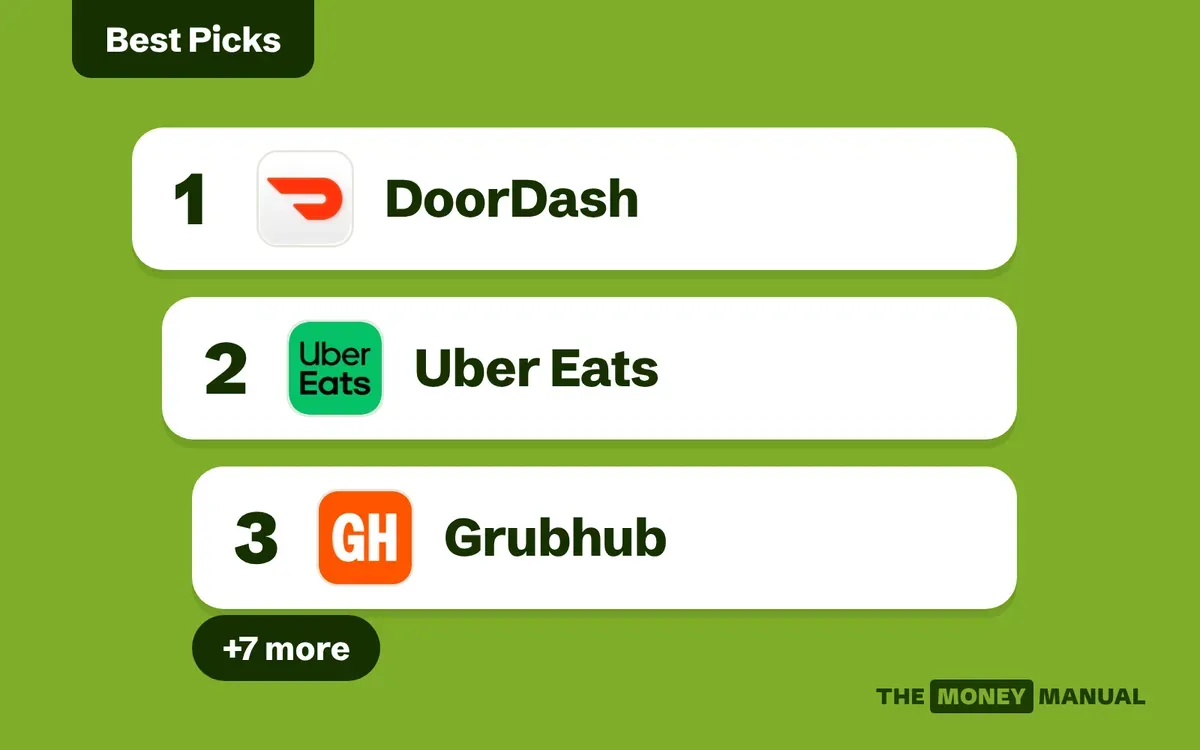
Our picks at a glance
 DoorDashConsider it for short delivery sessions
 Uber EatsConsider it for transport flexibility
 GrubhubConsider it if reserving delivery blocks fits
 InstacartConsider it if you are an efficient shopper
 ShiptConsider it for personal-shopping service
 Amazon FlexConsider it for block-based routes
 LyftConsider it if passenger work suits you
- TTaskrabbitConsider it for practical skills
 RoverConsider it for reliable pet care
 WyzantConsider it for subject expertise
Jump to any pick for the full assessment, costs and conditions.
Choose the category before the brand
| App or platform | Work type | Strong reason to consider it | Main cost or limitation |
|---|---|---|---|
| DoorDash | Restaurant and other delivery | Flexible offer-based work | Waiting, mileage, local access |
| Uber Eats | Delivery | Multiple transport modes in supported areas | Local demand and operating costs |
| Grubhub | Delivery | Scheduled block model | Market availability and restaurant waits |
| Instacart | Shopping and delivery | Work beyond simple pickup | Shopping time and heavy orders |
| Shipt | Personal shopping and delivery | Detailed customer-service work | Scheduling and vehicle requirements |
| Amazon Flex | Package and other delivery blocks | Defined block offers | Route mileage and block availability |
| Lyft | Passenger rides | Rideshare demand | Vehicle eligibility, insurance, wear |
| Taskrabbit | Local tasks | Practical service skills | Tools, travel, registration requirements |
| Rover | Pet care | Repeat local customers | Care responsibility and route time |
| Wyzant | Tutoring | Subject expertise | Preparation and finding students |
We reviewed official platform information for these models. “Best” here means a promising fit for a particular situation, not a measured highest-paying winner. None guarantees work or a particular net income.
DoorDash: consider it for short delivery sessions
DoorDash offers restaurant and other delivery work, with available transport types depending on the market. Its pay modes and scheduling access should be checked in your own account.
It can fit someone who already has suitable transport and wants to evaluate nearby delivery periods. The important questions are pickup distance, merchant wait, destination, and what happens after the delivery.
Do not mistake an active-delivery hourly rate for pay across every minute you are online. See delivery-app comparisons.
Uber Eats: consider it for transport flexibility
Uber's U.S. delivery page describes car, scooter, bicycle, and on-foot routes, with requirements varying by method and location. This makes it worth checking if you do not want passenger work.
The existence of a bike or walking option nationally does not establish availability at your address. Confirm the supported mode during signup.
A city route may be practical on a bike while a suburban route is not. Compare the physical work and carrying capacity as well as vehicle expenses.
Grubhub: consider it if reserving delivery blocks fits
Grubhub describes block scheduling and delivery pay plus tips. It may suit someone who prefers planning delivery periods in advance.
Check whether your market is accepting applicants and whether useful blocks are available. A scheduled block does not eliminate restaurant waiting, traffic, or vehicle costs.
Use Grubhub versus DoorDash to compare how the work fits your schedule.
Instacart: consider it if you are an efficient shopper
Instacart describes batch pay based on work-related factors and offers shop-only, delivery-only, and full-service order types where available. A batch can involve more than one order or store.
Shopping requires attention to substitutions, item details, checkout, and customer communication. A short driving distance can still hide a long shopping task.
Evaluate the complete batch, including heavy items and delivery access. Someone who knows local stores well may prefer this work to restaurant pickup.
Shipt: consider it for personal-shopping service
Shipt describes selecting, purchasing, and delivering items to customers within an agreed time. Its requirements include suitable transport and physical capacity.
This can fit people who enjoy careful shopping and communication. It is less appealing if you want minimal customer interaction or cannot reliably meet delivery windows.
Read the actual shopper opportunity in your market; platform availability does not mean immediate acceptance.
Amazon Flex: consider it for block-based routes
Amazon Flex organizes delivery opportunities into blocks showing expected earnings, start time, and estimated duration. Its FAQ says blocks vary and are not guaranteed.
A block can help you plan a work period, but include travel to the pickup station, the route, and the return to a useful location. A distant final stop can change the effective return.
Do not buy a vehicle based on hoped-for block availability. Test ordinary routes with full cost records.
Lyft: consider it if passenger work suits you
Lyft requires an eligible vehicle, screening, and local documentation. Passenger driving also creates insurance and customer-service responsibilities.
The decision should be based on what remains after all work miles and time, not the fare shown for a single ride. Renting adds fixed costs and separate requirements.
Our Lyft review explains the fee cap, payout conditions, and a shift-cost example.
Taskrabbit: consider it for practical skills
Taskrabbit can connect customers with people doing local tasks. Its U.S. enrollment guidance includes eligibility, location, account, and registration requirements.
A task rate can look attractive until travel, tools, and preparation are included. Choose categories you can perform safely and define the scope before arrival.
Local task jobs covers assembly, moving help, and similar work.
Rover: consider it for reliable pet care
Rover lets sitters describe services and preferences. Repeat walks or visits may create a useful local schedule, but caring for an animal is a substantial responsibility.
Meet the pet where practical, document routines and emergency instructions, and check permissions and insurance for boarding. Do not accept animals or medical tasks beyond your competence.
See pet sitting and dog walking.
Wyzant: consider it for subject expertise
Wyzant supports online and in-person tutoring and lets tutors set rates within its platform arrangement. Eligibility and approval requirements apply.
Preparation, communication, and student acquisition are part of the work. A one-hour lesson is not necessarily only one working hour.
Our tutoring guide includes a first-lesson structure and pricing example.
Compare a real week of work
Use the same calculation across categories:
Net contribution before tax = approved revenue − platform charges not already deducted − direct costs − reasonable operating-cost allocation.
Then divide by all work time, including travel, waiting, preparation, and administration. Avoid double-counting fees already removed from the earnings figure.
A hypothetical delivery shift pays $90 and has $25 of operating costs over four hours, leaving $16.25 per hour. A hypothetical tutoring appointment pays $40 but takes 90 minutes including preparation, leaving $26.67 before fees and costs. These are illustrations, not typical platform rates.
Make a small trial plan
Pick one primary candidate and one alternative. Verify requirements, understand payment, and use equipment you already have where possible. Track several representative work periods rather than one bonus-heavy result.
If the platform is full, do not pay anyone to bypass the waitlist. If the work is unprofitable, change the schedule, category, or plan rather than assuming more hours will fix the economics.
Read gig earnings after expenses and keep records for side-hustle taxes.
FAQs
Which gig app pays the most?
There is no reliable universal answer. Local demand, skills, costs, and total time determine your result.
Can I join several apps?
You can compare eligible platforms, but follow their terms and avoid accepting overlapping work you cannot complete reliably.
Do I need a car?
Not for every category. Tutoring, some local tasks, and supported bike or walking delivery may be options.
Does fast cashout mean fast onboarding?
No. Approval, work availability, earnings eligibility, and withdrawal are separate stages.
Should I buy equipment before signing up?
Confirm eligibility and demand first. A large purchase adds risk before you know whether the work fits.
Sources and research notes
- DoorDash US Dasher requirements and earning model
- Uber Eats delivery options
- Grubhub driver requirements and pay
- Instacart shopper earnings
- Shipt shopper information
- Amazon Flex official FAQ distribution page
- Lyft driver requirements and local variations
- Taskrabbit US Tasker requirements
- Rover sitter enrollment
- Wyzant tutor enrollment
Source pages checked October 30, 2026. Worked examples are hypothetical; they are not observed earnings or guarantees.