In this article
Groceries, a tank of gas and an online order do not make a glamorous rewards strategy. They do make a fairly normal week.
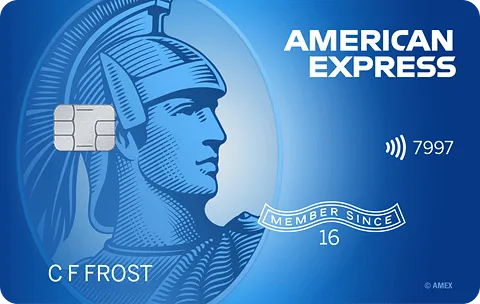
That is the appeal of Blue Cash Everyday. You can earn a higher rate on familiar purchases without paying an annual fee or waiting for a rotating calendar to cooperate. The catches are the stores that qualify, three separate caps and the purchases that fall back to 1%.
It is also easy to underestimate this card beside Blue Cash Preferred. Preferred's supermarket rate is higher, but Everyday earns more on eligible online retail. In our shared household, Preferred's ongoing advantage after its annual fee is only $7 a year before optional credits. The fuller comparison is more interesting than the names suggest.
Our take: give it three jobs, then use a fallback
Our recommendation: Consider Blue Cash Everyday for eligible U.S. supermarkets, gas stations and online retail, particularly if you already have a suitable card for other purchases. Confirm your merchants before relying on the 3% rate. Amex product terms
- Good fit if: Those three categories are recurring expenses, you prefer no annual fee and you want consistent categories rather than quarterly activation.
- Consider another card if: Dining dominates your budget, you mainly shop at excluded superstores or warehouse clubs, or you frequently make foreign purchases.
- The tradeoff: In our $24,000 household, using Everyday for everything earns $456. Using it only for its qualifying 3% purchases and a 2% card elsewhere earns $588–$108 more than the 2% card alone.
The name Everyday can tempt you to use it everywhere. We would let the earning rules decide its role. A strong grocery and online-shopping card does not need to be the best card for a restaurant bill too.
Blue Cash Everyday rewards and fees at a glance
| Feature | Reviewed standard consumer card |
|---|---|
| Annual fee | $0 |
| U.S. supermarkets | 3% on the first $6,000 per calendar year, then 1% |
| U.S. gas stations | 3% on the first $6,000 per calendar year, then 1% |
| U.S. online retail | 3% on the first $6,000 per calendar year, then 1% |
| Other eligible purchases | 1% |
| Referenced prospect welcome offer | As high as $200 after $2,000 of purchases in the first six months; amount and eligibility vary by offer |
| Introductory purchase and transfer APR | 0% for 15 months from account opening in the reviewed offers |
| Later purchase and transfer APR | 19.49%–28.49% variable in the reviewed pricing |
| Transfer and foreign fees | Transfers: greater of $5 or 3%; foreign purchases: 2.7% |
Transfers must be requested within 60 days under the reviewed offer. Cash advances have a separate 28.74% variable APR and a fee of the greater of $10 or 5%. Late or returned payments can cost up to $40, and a penalty APR can apply. Check the current application disclosure for the exact offer and pricing presented to you. Application rates, offers and benefits
The linked prospect disclosure offers cash back as high as $200. During our September 15 check, the product page also displayed a separate Card Member Offer of $100 after the same $2,000 spending requirement. Confirm the offer actually presented to you; the higher amount is not universal. Both disclosures allow 8–12 weeks after qualifying spending for the bonus to post. Prospect offer Observed Card Member Offer
This review covers the standard consumer Blue Cash Everyday Card from American Express National Bank. We use cash values and planned purchases, not a travel-point estimate or a claim that every applicant receives the highest advertised offer.
Your shopping list does not determine the merchant category
The supermarket definition is narrower than “a place where I buy groceries.” Amex excludes superstores, warehouse clubs, convenience stores and meal-kit services from that category. Its gas definition also excludes fuel sold by supermarkets, superstores and warehouse clubs. Amex category definitions
A $150 basket of food at an excluded warehouse club does not qualify for 3% merely because every item is edible. In the ordinary fallback category, that eligible purchase earns $1.50. The same dollar amount at a qualifying U.S. supermarket earns $4.50 while you are below the cap.
The $3 difference is real, but it is not a reason to pay more for the groceries. If the warehouse basket costs $140 and the supermarket basket costs $150, their costs after these rewards are $138.60 and $145.50. The cheaper basket still wins by $6.90. Compare the total shopping cost before allowing a reward category to choose the store.
Our Walmart, Target and Costco rewards guide explains the store-and-channel distinctions. We would use a normal, modest purchase to check how a merchant posts before routing a large recurring budget there on an assumption.
Online retail is the category that changes the comparison
Eligible online retail generally means physical goods bought and paid for online from a U.S. retail merchant, with the transaction identified appropriately. It is not a blanket 3% rate on everything purchased through an app or website. Online-retail terms
The reviewed exclusions include restaurants, supermarkets, gas, auto dealers, travel, entertainment and services. Ordering online but paying in the store does not qualify as an online purchase under this rule. Using a digital wallet at an in-store checkout does not turn the transaction into online retail either.
Amex lists Amazon.com, Walmart.com and Chewy.com among its retail examples. An otherwise eligible order paid online and picked up in a store can qualify if the merchant classifies it as an online purchase. That is a useful distinction from paying with a wallet at the checkout. Third-party buy-now-pay-later payments are excluded. Retail examples and pickup rules
Think of a hypothetical $100 purchase of eligible household goods on a retailer's website. At 3%, it earns $3. A $100 restaurant delivery order is a different category even though you also placed that order online. Everyday's ordinary 1% rate would produce $1 if no other offer applies.
This is where Everyday distinguishes itself from Blue Cash Preferred. On $3,600 of eligible annual online retail, Everyday earns $108 while Preferred's ordinary 1% produces $36. That $72 advantage helps offset Preferred's higher supermarket rewards before you even consider its annual fee.
If you shop online often, include the category in the comparison explicitly. Do not assume the higher-fee card improves every part of the budget.
What would this card earn in a normal year?
Our shared example uses $24,000 of eligible annual purchases, with spending distributed evenly and all illustrated higher-rate purchases qualifying. The online-retail amount includes $2,400 of general online shopping plus $1,200 of eligible Amazon purchases, with no double counting.
| Annual spending | Amount | Rate used | Rewards |
|---|---|---|---|
| Qualifying U.S. supermarkets | $4,800 | 3% | $144 |
| Qualifying U.S. gas stations | $2,400 | 3% | $72 |
| Eligible U.S. online retail | $3,600 | 3% | $108 |
| Other eligible purchases | $13,200 | 1% | $132 |
| Total | $24,000 | Mixed | $456 |
All three categories stay below their separate caps. With no annual fee, the ongoing cash-back result is $456 before optional benefits. A 2% card earns $480 on the same purchases, so Everyday used alone trails by $24 a year, or $2 a month.
That is a close one-card comparison. The two-card result is more decisive. Keep the $10,800 of higher-rate purchases on Everyday and put the remaining $13,200 on a 2% card. Rewards become $324 plus $264, totaling $588. The improvement over the 2% card alone is $108 a year, or $9 a month.
These are modeled results, not a promise about a particular reader's transactions. We assume planned eligible spending, no returns or fees, cash redemption and full payments preserving the purchase grace period. Optional credits and insurance benefits receive no guaranteed base value.
If the applicant receives and earns an actual $200 welcome offer, the one-card first-year result becomes $656. With the observed $100 Card Member Offer earned, it would be $556. The phrase “as high as” belongs to the referenced prospect offer; use the amount and deadline on your own application.
Is Blue Cash Preferred worth the annual fee instead?
Blue Cash Preferred earns 6% at qualifying U.S. supermarkets on the first $6,000 per calendar year, 6% on select U.S. streaming, and 3% at qualifying U.S. gas stations and on transit. Its ongoing annual fee is $95, after the reviewed first-year waiver. Preferred product and pricing
On our shared household, Preferred earns $558 before its recurring fee and $463 after it. Everyday earns $456. Preferred leads by just $7 a year when each is used alone, before optional subscription credits.
Give each card the same suitable 2% fallback and the comparison becomes $621.40 for Preferred after its fee versus $588 for Everyday. Preferred's lead is then $33.40 a year, or about $2.78 a month. That is the fairer comparison if you already plan to use two cards.
The result is close because Everyday's online-retail advantage offsets much of Preferred's grocery and streaming advantage. A household with more qualifying groceries and less online shopping may reach a different answer. So may a household with substantial transit expenses.
We would not use the familiar grocery-only break-even as the entire decision. Our Everyday versus Preferred comparison includes the purchases both cards handle differently, then subtracts the fee. A $7 annual advantage is small enough that account preferences and actual credit use can reasonably decide the choice.
Count subscription credits only when they save you money
Everyday's Disney streaming benefit offers up to $7 monthly in statement credits for qualifying direct U.S. subscription purchases after enrollment. Eligible subscriptions and billing channels are defined in the terms, and subscriptions renew automatically. Current benefit details Full credit conditions
If you already keep an eligible monthly subscription costing at least $7 and use the credit in all 12 months, the benefit can save $84 over the year. If you would cancel the subscription without the credit, assigning it the full $84 overstates the card's value to you.
An annual subscription charge also does not create 12 monthly credits. It is a charge in one month, subject to that month's credit limit. Compare your actual billing arrangement rather than multiplying a monthly cap automatically.
Preferred's corresponding reviewed monthly cap is $10. If you can use both cards' credits fully, the additional value of Preferred over Everyday is $3 a month, or $36 a year. It is not the entire $120 advertised annual maximum. That incremental comparison matters when deciding whether to pay Preferred's fee.
Everyday also has an enrolled Home Chef benefit of up to $15 a month, or $180 a year, for eligible meal-kit subscriptions bought through the specified Home Chef page. This is a weekly subscription that renews automatically; individual kits, gift cards and kitchenware do not qualify. Count only savings on meals you would already buy. It can change a close comparison with Preferred, but it adds nothing to our base household, which does not assume a Home Chef subscription. Home Chef conditions
Other card-linked offers can be useful when they match spending you already planned. We would keep them out of the recurring base estimate because availability and fit vary.
Redemption and the application decision
Rewards arrive as Reward Dollars. The reviewed terms allow statement-credit redemption or eligible Amazon checkout use without a minimum. The Amazon redemption has the same stated value, but the portion paid with rewards does not earn new purchase rewards. Cash-back and redemption rules
A statement credit reduces the balance but does not replace the required minimum payment. For clear accounting, we prefer to track the full purchase, the reward redemption and the required card payment as separate entries.
The application process can show whether you are approved before you choose to accept the card, with the credit-impact distinction described by Amex. Approval and welcome-offer eligibility are separate questions. Prior ownership of Everyday, Preferred, Cash Magnet or specified related variants can affect offer eligibility under the reviewed terms. Application process Offer eligibility
Before accepting, confirm the actual bonus, required spending, deadline and pricing shown to you. The introductory APR has an end date, and minimum payments remain due. If you expect to carry debt afterward, borrowing costs deserve priority over the difference between 1% and 3% rewards.
Which alternatives deserve a look?
| Alternative | Consider it when | What could change the answer |
|---|---|---|
| Blue Cash Preferred | Qualifying supermarket, streaming and transit spending is substantial | $95 ongoing fee, grocery cap and online-retail rewards you give up |
| Capital One Savor | Dining and entertainment matter alongside qualifying groceries | Broader food focus, merchant exclusions and 1% fallback |
| A suitable flat 2% card | You want one ordinary rate across the whole budget | Redemption, qualification and any foreign fee |
| A store-specific option | Much of the budget goes to one excluded store or shopping channel | Merchant restrictions, membership cost and value outside that store |
For this household, we like Everyday's role as a no-fee specialist more than its role as the only card. For your household, begin with the three merchants or shopping channels you use most. If they fit the categories and your existing fallback is useful, the card can add a manageable amount of extra cash without a complicated quarterly routine. The grocery-card guide and main comparison widen the shortlist.
Frequently asked questions
Are the three $6,000 caps shared?
No. Supermarkets, gas stations and online retail each have a separate $6,000 calendar-year allowance for 3% earning. The limits are shared across the card account, including additional cards.
Does Walmart Pay automatically earn 3%?
No. An in-store wallet transaction is not automatically eligible online retail, and superstores are excluded from the supermarket category. Check the merchant, payment channel and posted reward classification.
Is the maximum $200 welcome offer guaranteed?
No. The referenced prospect offer says as high as $200, while a separate Card Member Offer displayed $100 during our check. The actual amount and eligibility presented to you control. Do not budget the maximum before seeing your own offer.
Is Everyday better than Preferred?
It can be, especially when eligible online retail matters or the annual fee outweighs Preferred's additional rewards. In our shared household, Preferred leads by only $7 a year after its recurring fee and before optional credits. Your spending can change that result.
Can I redeem a small reward balance?
The reviewed terms have no minimum for the specified statement-credit and eligible Amazon redemptions. A reward credit does not satisfy the minimum payment, so check the amount still due separately.
How we evaluated this card
We reviewed the issuer terms and sources linked below and compared modeled, planned household purchases at documented cash-redemption values. Examples distinguish introductory offers from ongoing value and show relevant caps, exclusions and costs. They are illustrations, not personal card-use claims or approval predictions.
Product, benefits and the identified offer disclosures checked September 15, 2026.
Sources & references5 sources
The issuer terms and other references behind this article.
- American Express Blue Cash Everyday product and benefit terms
- Blue Cash Everyday current application pricing, reward and benefit terms
- American Express eligible retail and rewards category definitions
- American Express Blue Cash Preferred product and benefit terms
- Blue Cash Everyday observed Card Member Offer and benefit terms