In this article
At first glance, Double Cash seems to turn a simple reward into an accounting exercise. Why earn half now and half later when some cards advertise the whole amount on the purchase?
For someone who makes eligible purchases and then pays them in full, the two stages can still produce a straightforward 2% result. The important thing is knowing what counts as a payment. A rewards statement credit reduces your balance, but Citi does not treat it the same way for the payment-stage reward.
There is a second distinction that matters much more in dollars: an introductory balance-transfer offer is not an introductory purchase offer. A useful rewards card and a useful debt-repayment tool can require different routines on the same account.
Our take: useful flat-rate rewards, with a few rules to learn
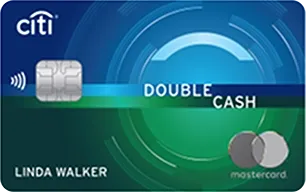
Our recommendation: Consider Double Cash as an everyday card or a fallback beside a specialist if you pay purchase balances in full and its redemption options suit you. Compare it directly with another 2% card before choosing on the headline alone. Citi Double Cash terms
- Good fit if: Your spending spans many categories, you want no quarterly enrollment and you are comfortable checking how payments and rewards post.
- Consider another card if: You want all ordinary rewards tied to the purchase, frequently pay foreign merchants, or need an introductory purchase APR.
- The tradeoff: The two-stage structure can deliver the same $480 on $24,000 of eligible purchases as a flat 2% alternative. The practical differences are payment treatment, redemption, offers and account management.
You do not have to pay interest to earn the second half. Full eligible payments can earn it while preserving the purchase grace period when the applicable conditions are met. Carrying a balance is an expensive way to wait for a small reward.
Citi Double Cash rewards and fees at a glance
| Feature | Reviewed terms |
|---|---|
| Annual fee | $0 |
| Ordinary earning | 1% on eligible purchases plus 1% on eligible payments, limited by the Purchase Tracker |
| Eligible Citi Travel purchases | 5% total on hotels, car rentals and attractions booked through Citi Travel |
| Reward currency | ThankYou Points; this review uses the documented cash value |
| Purchase APR | 18.24%–28.49% variable; no introductory 0% purchase offer |
| Balance-transfer promotion | 0% for 18 months from opening, on transfers completed within four months |
| Transfer fee | 3%, minimum $5, during the first four months; then 5%, minimum $5 |
| Foreign purchase fee | 3% of the U.S.-dollar amount |
The direct product offer and its displayed pricing were checked September 15, 2026. Offers can vary by application channel, so compare the bonus, fees and promotional period with the terms attached to the application you intend to use. Product and rewards Acquisition disclosure
Cash advances have separate fees and interest, and a penalty APR or other charges can apply under the agreement. Transfers and their fees do not earn ordinary purchase rewards. A reward calculation should not count money moved from one debt account to another as shopping.
How the two-stage reward actually works
Start with a clean example: no balance, no existing tracker amount and a $1,000 eligible purchase. The purchase earns $10 at the first 1% stage. It also adds $1,000 to the Purchase Tracker, which records purchase dollars that can support payment-stage rewards.
The tracker is not another bill. You still owe the purchase balance on the card. When you make an eligible $1,000 payment, the payment stage earns another $10 and the tracker returns to zero in this simplified example. Purchase Tracker agreement
| Action | Purchase-stage cash value | Payment-stage cash value | Tracker afterward |
|---|---|---|---|
| $1,000 eligible purchase posts | $10 | $0 | $1,000 |
| $1,000 eligible payment posts | $0 | $10 | $0 |
| Completed cycle: $20 total rewards | $10 | $10 | $0 |
That is the advertised 2% completed in two steps. Citi accounts for activity by billing cycle, so transactions near a cutoff can appear in a later cycle. Do not expect every purchase, payment and reward balance to update at exactly the same moment.
For a cardholder with ordinary purchases and full payments, this can become a familiar monthly routine. It takes more explanation than a purchase-only reward, but it does not require carrying debt, paying late or finding special merchants.
Why statement credits change the small print
Now use that same $1,000 purchase, but redeem the first $10 of rewards as a statement credit. The balance falls to $990. If you make an eligible $990 payment, the payment stage earns $9.90, rather than $10, in this simplified sequence.
The $10 statement credit was not an eligible payment for the second 1%. It therefore leaves $10 in the tracker. That is an accounting and timing distinction; it does not mean the remaining tracker amount must disappear permanently. Future qualifying activity can affect it. Payment-stage treatment
The immediate difference here is ten cents. We would not make ten cents sound like a financial emergency. But it is worth understanding because the card's headline can otherwise imply that every way of reducing the balance produces the same reward.
If you prefer a cleaner sequence, eligible cash redemption to a bank account followed by a full eligible card payment can make the two stages easier to follow. Citi supports deposit to eligible accounts, including verified non-Citi accounts under its agreement's verification rules. Confirm the route available to you before relying on it.
Whatever redemption you choose, a statement credit does not replace the required minimum payment. Keep reward redemption separate from the amount and date you must pay.
What would the rewards be worth for your budget?
At the documented cash value, 10,000 ThankYou Points equal $100. Other uses of points can have different values, so the household examples here use cash. Statement-credit and direct-deposit redemption have no minimum in the reviewed product terms; a mailed check requires at least $5. Citi cash-redemption explanation
Our household makes $2,000 of eligible purchases each month and makes the corresponding eligible payments. That is $24,000 of annual purchases and $480 in ordinary annual rewards. There are no Citi Travel bookings in this example.
| Annual eligible purchases, with matching eligible payments | Double Cash ordinary rewards | A 1.5% card | Difference |
|---|---|---|---|
| $12,000 | $240 | $180 | $60 |
| $24,000 | $480 | $360 | $120 |
| $36,000 | $720 | $540 | $180 |
For the middle household, choosing 2% over 1.5% adds $10 a month. Choosing Double Cash over another suitable 2% card does not improve the ordinary return. That is where the welcome offer, redemption experience and other costs become the useful comparison.
The direct offer checked September 15 is $200 after $1,500 in purchases in the first six months. If that offer applies to your application and you qualify and earn it, first-year rewards in the $24,000 example become $680. The ongoing year returns to $480. Do not carry an opening bonus forward into every annual estimate. Offer and eligibility conditions
These are modeled examples, not observed cardholder results. They assume planned eligible purchases, corresponding eligible payments, cash redemption, no returns or payment fees, and full payments preserving the purchase grace period. Optional benefits are assigned no guaranteed annual value.
Citi Travel: compare the booking before counting the reward
Double Cash offers a higher total return on eligible hotels, car rentals and attractions booked through Citi Travel. That is a particular booking channel, not the ordinary rate for every hotel or rental-car purchase. Citi Travel earning terms
Before choosing a portal booking, compare the total price, cancellation terms and what happens if plans change. A larger reward percentage is not automatically a cheaper trip.
For example, a hypothetical $500 booking earning a completed 5% cash return produces $25, leaving a $475 net cost before other considerations. A comparable direct booking priced at $480 and earning 2% leaves a $470.40 net cost. The lower reward rate can still produce the better price.
That example assumes both purchases qualify, the full payment-stage reward is earned, and the bookings are otherwise comparable. The point is to compare dollars and terms together. We leave portal spending out of the household baseline because it is occasional and varies considerably by reader.
A balance transfer calls for a different routine
The reviewed promotion provides a repayment window for qualifying transferred debt. It does not turn new purchases into 0% purchases. Citi's product page explicitly distinguishes the two and explains that transferred balances can affect purchase interest unless the required balance is paid. Citi purchase-interest warning
Suppose a $3,000 transfer carries a 3% fee. You start with $3,090 to repay. If the transfer is completed near opening and 18 monthly payments fit before the actual promotional deadline, the target is about $171.67 a month, with the final payment adjusted for rounding.
A later transfer has less time because the promotion runs from account opening. With only 15 payments remaining, the same $3,090 requires $206 per payment. Counting actual payment dates is more useful than dividing by the advertised maximum period without checking the calendar.
We would aim to finish before the last possible payment. A late start, an unexpected expense or a missed transfer posting can make a plan tighter than it looked on paper.
Be especially careful about using the account for fresh shopping while carrying transferred debt. A $20 reward on a $1,000 purchase is small compared with the interest that can follow when a purchase grace period is unavailable. The CFPB's explanation of promotional transfers and new purchases is a useful place to understand that interaction.
If debt repayment is the main job, give the repayment plan priority. It may be easier to keep new purchases elsewhere while you pay down the transfer, provided your broader budget supports that approach. Do not spend more because a credit line becomes available.
Which alternatives deserve a look?
| Alternative | When it may suit you better | What to compare |
|---|---|---|
| Wells Fargo Active Cash | You prefer the ordinary 2% reward tied to eligible purchases | Current bonus, purchase promotion, foreign fee and redemption routes |
| PNC Cash Unlimited | Foreign purchases are a regular part of your spending | Qualification, minimum credit line and cash-redemption conditions |
| Capital One Savor beside a 2% card | A meaningful share of spending qualifies for food and entertainment rewards | Incremental cash after merchant exclusions and the work of another account |
Active Cash is the closest everyday alternative. Our Active Cash versus Double Cash comparison shows why identical ordinary returns can still lead to different choices. An introductory purchase APR can matter for a planned expense, while redemption preferences can matter every month. Active Cash terms
PNC Cash Unlimited deserves a look for a flat-rate option without a foreign transaction fee, subject to its application and account conditions. A 3% foreign-purchase fee on Double Cash can outweigh a completed 2% reward. PNC product terms
If groceries and dining are a large part of the budget, consider keeping a 2% card as the fallback and using a suitable category card for the purchases it handles better. Our Savor review puts that improvement in monthly dollars, and the central comparison broadens the options.
Should you get Citi Double Cash?
We like Double Cash for someone who wants broad ordinary rewards, pays eligible purchase balances in full and is comfortable with the purchase-and-payment structure. It can be a steady main card or a useful fallback without a category calendar.
We would start elsewhere if you need an introductory purchase promotion or expect substantial foreign spending. If you are evaluating a balance transfer, judge the fee and payoff schedule before the rewards.
Before applying, confirm the offer in the actual disclosure and choose the redemption route you expect to use. Then compare it with another suitable 2% card. The best reason to pick Double Cash is that its whole routine fits your finances, not that two stages make the same 2% inherently more valuable.
Frequently asked questions
Do I have to pay interest to earn the second 1%?
No. Eligible payments toward purchase balances can earn the payment-stage reward without paying interest when full payments preserve the applicable grace period. Carrying debt is not required.
Does paying only the minimum earn cash back?
Eligible payments can earn the second-stage reward up to the Purchase Tracker amount. But interest on the remaining balance can far exceed that reward. The earning rule is not a reason to repay more slowly.
Do balance transfers earn rewards?
No. Transfers are not purchases in this reward structure, and the transfer fee is an added borrowing cost. Evaluate the promotion as a debt-repayment decision.
Can I redeem to a bank outside Citi?
The reviewed agreement permits direct deposit to a verified non-Citi account, subject to its prior-payment or account-verification process. Confirm the available account and redemption options in your own reward account. Redemption agreement
Is there a guaranteed credit-score cutoff?
The issuer decides approval, limit and pricing from the application. The reviewed bonus rules also exclude certain prior new-account bonuses within 48 months, including specified conversions. A score estimate or previous account does not establish guaranteed eligibility. Citi application conditions
How we reviewed it: This review combines issuer research with modeled purchases, payments and redemptions. It does not claim firsthand card testing. The direct product offer and displayed pricing were checked in the browser on September 15, 2026; the terms attached to your application control.
Sources & references6 sources
The issuer terms and other references behind this article.
- Citi Double Cash product and rewards terms
- Citi Double Cash linked acquisition pricing and reward agreement
- Citi Double Cash ThankYou reward terms
- CFPB explanation of new purchases during promotional balance transfers
- Wells Fargo Active Cash product and rewards disclosures
- PNC Cash Unlimited product and cash redemption conditions