In this article
Two cards promising 2% cash back should be an easy comparison. In one important sense, they are: if you spend the same amount on ordinary eligible purchases and make the corresponding eligible Citi payments, the annual rewards can be identical.
The differences show up around that number. One card completes its normal earning at the purchase stage. The other splits it between buying and paying. One currently includes an introductory purchase promotion; the other offers a longer promotional transfer period.
You do not need to invent a winner on rewards that tie. You need the card whose routine fits the way you manage money.
Our take: Active Cash for simplicity, Double Cash for a specific advantage
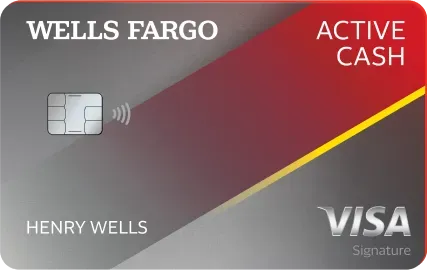
We would start with Active Cash if you want the full ordinary 2% tied to eligible purchases and prefer fewer moving parts. Its current purchase promotion and conditional cellphone protection may provide useful additional reasons to choose it. Wells Fargo product and terms
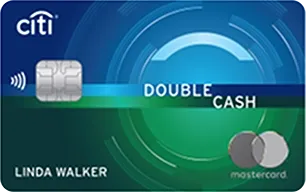
Double Cash deserves the closer look if you can use its longer transfer promotion with a concrete payoff plan, or if the current welcome offer is more valuable on spending already planned. Its 1%-when-you-buy and 1%-as-you-pay structure works well for people who understand the eligible-payment rule. Citi offer
If you already hold one, opening the other solely for everyday rewards usually adds little. A category card may give the second account a clearer job. If you expect interest-bearing debt, compare borrowing costs before rewards.
The terms that can decide the choice
| Feature | Wells Fargo Active Cash | Citi Double Cash |
|---|---|---|
| Annual fee | $0 | $0 |
| Ordinary rewards | 2% on eligible purchases | 1% on purchases plus 1% on eligible payments |
| Current direct welcome offer | $100 after $500 in qualifying purchases in 3 months | $200 after $1,500 in purchases in 6 months |
| Introductory purchase APR | 0% for 12 months | No 0% purchase offer in the reviewed disclosure |
| Introductory transfer APR | 0% for 12 months; qualifying transfers within 120 days | 0% for 18 months; transfers completed within 4 months |
| Introductory transfer fee | 3%, minimum $5, for qualifying transfers within 120 days | 3%, minimum $5, for transfers completed within 4 months |
| Later transfer fee | Up to 5%, minimum $5, under the disclosure | 5%, minimum $5 |
| Standard purchase APR | 18.49%, 24.49% or 28.49% variable | 18.24%–28.49% variable |
| Foreign transaction fee | 3% | 3% |
These are the acquisition terms checked September 15, 2026. Offers can differ by application channel, and existing accounts can have different terms. The promotional clock begins at account opening; a transfer deadline is not a new promotional start date. Read the offer attached to your application. Active Cash pricing Double Cash pricing
On ordinary annual spending, the reward can tie
Here is the simplest comparison, excluding bonuses, interest, fees and special booking channels. Citi’s results assume eligible payments earn the corresponding second-stage reward.
| Annual eligible purchases | Active Cash | Double Cash after eligible payments |
|---|---|---|
| $6,000 | $120 | $120 |
| $12,000 | $240 | $240 |
| $24,000 | $480 | $480 |
| $40,000 | $800 | $800 |
Neither ordinary structure requires remembering a supermarket cap or quarterly category. That makes either card useful for the purchases a specialist handles poorly: household supplies, insurance if eligible and fee-free, miscellaneous shopping and other ordinary spending.
There is no recurring $100 advantage for Citi in this table just because its current welcome bonus is $100 larger. That belongs in year one. Keeping those two comparisons separate makes the decision much clearer.
Citi’s second stage is worth understanding once
Buy $1,000 of eligible goods with Active Cash and the ordinary reward is $20. Buy the same goods with Double Cash and the purchase stage earns $10. An eligible $1,000 payment can earn another $10, subject to Citi’s Purchase Tracker and payment conditions. Paying interest is not required. Wells Fargo rewards Citi rewards agreement
The Purchase Tracker limits payment-stage earning to qualifying purchase amounts that have not already generated that stage of rewards. It prevents an unrelated overpayment or balance-transfer repayment from becoming an unlimited source of purchase rewards.
Now suppose you redeem $10 of existing Citi rewards as a statement credit against a $1,000 bill and pay the remaining $990. The statement credit is not itself an eligible payment.
Here is a hypothetical timeline, starting with a $0 Purchase Tracker, those existing rewards and no other transactions or returns. These dates illustrate the accounting; they are not a promise of processing speed.
| Example date | What happens | Reward or tracker effect |
|---|---|---|
| September 1 | A $1,000 eligible purchase posts | Purchase Tracker becomes $1,000. |
| September 20 | Billing cycle closes | Purchase-stage points are worth $10. |
| October 5 | The $10 reward statement credit has posted | Card balance falls to $990; tracker remains $1,000. |
| October 10 | An eligible $990 payment posts by the due date and meets the required minimum | Tracker falls to $10. |
| October 20 | The next billing cycle closes | The $990 payment generates points worth $9.90. |
Citi credits points by billing cycle; cutoff or processing timing can push activity into a later cycle. A requested cash statement credit can itself take up to two billing cycles. Plan the payment around what actually posted, not the date you requested a reward credit. Citi reward timing
That is not the same as saying the remaining 10 cents is permanently lost. The full review follows the tracker into a later cycle. The practical distinction is that a reward credit, a payment and a purchase are different actions under the program.
If you prefer a cleaner routine, redeem cash to an eligible bank account and make the full eligible card payment. Citi permits deposits to an eligible Citi account or a verified non-Citi account through the agreement’s verification process. Points are credited by billing cycle, and activity near a cutoff can take another cycle. Citi cash access and timing
For either card, do not assume a statement credit replaces the required minimum payment. Use the account’s displayed payment requirement and due date.

The current welcome offers give Citi a first-year lead
At $24,000 in ordinary annual purchases, and assuming each applicant qualifies and completes the relevant offer on planned spending:
| Value | Active Cash | Double Cash |
|---|---|---|
| Ordinary annual rewards | $480 | $480 |
| Current direct welcome bonus | $100 | $200 |
| Modeled first-year total | $580 | $680 |
| Ordinary later-year total | $480 | $480 |
The spending requirements differ too. Active Cash’s reviewed offer needs $500 in three months. Citi’s needs $1,500 in six months. The larger bonus is useful only if those purchases fit comfortably within your existing budget and eligibility rules. Wells Fargo offer Citi offer
For a person already planning $300 a month in eligible purchases, six months totals $1,800. That could cover Citi’s threshold with a $300 buffer, assuming purchases post in time and no returns reduce qualifying spending. Someone planning only $150 a month would reach $900, leaving a $600 gap. Spending that extra $600 solely to obtain a $200 bonus would defeat the point.
Our welcome-bonus guide explains how to plan around dates and posted purchases. The card should work after the bonus has been spent.
A balance transfer needs a separate calculation
Double Cash’s longer introductory transfer period can be meaningful. It is also a borrowing feature, so start with the debt and payment schedule rather than the reward rate.
Suppose a qualifying $3,000 transfer incurs the introductory 3% fee. The fee is $90, making the starting amount $3,090 if added to the account. With a transfer near account opening and the full modeled number of payment dates available:
| Payoff schedule | Amount to repay | Approximate payment |
|---|---|---|
| 12 payments | $3,090 | $257.50 |
| 18 payments | $3,090 | $171.67, with final rounding |
| 15 payments remaining | $3,090 | $206 |
The third row matters because the promotional clock does not wait for you to transfer. Count the actual due dates before the promotion ends and leave a buffer for processing or an unexpected expense. A lower required minimum payment is not necessarily enough to clear the balance before the standard APR applies.
Do not put new purchases on Double Cash assuming the transfer promotion covers them. Its reviewed offer has no matching 0% purchase promotion. Carrying the transferred balance can also affect the grace period on new purchases. The CFPB explains why promotional transfers and new spending can interact this way. CFPB transfer guidance
Active Cash currently includes a purchase promotion as well, but the promotion ends and its terms still require attention. Transfer fees and transferred debt do not earn ordinary purchase rewards on either card under the reviewed rules. Wells Fargo terms Citi terms
Phone protection can be useful without being free money
Active Cash’s cellphone protection is conditional on paying the eligible wireless bill with the card and meeting the benefit guide. The reviewed coverage is up to $600 for covered damage or theft, subject to a $25 deductible and a limit of two paid claims in a 12-month period, with exclusions and timing requirements. Wells Fargo benefit guide
That can be a useful reason to choose the card, especially if your existing phone-payment arrangement does not become more expensive. But compare any lost autopay discount first.
On a hypothetical $200 monthly phone bill, 2% earns $4. Losing a $20 monthly discount to pay by credit card creates a net cost of $16 a month, or $192 a year, before any covered claim. Protection may still be valuable, but an uncertain future reimbursement should not quietly erase a certain recurring cost in the comparison.
The Active Cash review explains coverage timing and claim conditions in more detail. Assign optional insurance value only after checking whether it actually fits your phone and circumstances.
Booking channels and foreign purchases can break the tie
Double Cash advertises a total 5% on eligible hotels, car rentals and attractions booked through Citi Travel: the ordinary purchase and eligible-payment rewards plus an extra 3%. It is not the return on every airline or hotel purchase. Citi Travel terms
At the same $500 price, an eligible booking earns $25 through the portal versus $10 at the ordinary 2% rate, a $15 improvement. But suppose that same suitable booking costs $480 elsewhere. The portal’s $500 minus $25 is $475; the alternative’s $480 minus $9.60 is $470.40. The higher-reward booking costs $4.60 more after rewards.
Both examples assume corresponding eligible Citi payments and otherwise comparable bookings. Compare cancellation terms and the actual final price before moving a reservation for rewards.
For foreign purchases, both cards’ 3% fee can exceed the ordinary 2% return. On a $1,000 eligible charge, $20 in rewards minus $30 in fees leaves a $10 loss. A suitable no-foreign-fee card may be the better companion for travel or overseas merchants.
Our no-annual-fee comparison includes alternatives with their account and redemption conditions. You do not need to force either card into a job it handles poorly.
The deciding question is what you want to manage
Choose Active Cash if you want purchase-based earning, find its current purchase promotion useful and value any benefits on their actual terms. Choose Double Cash if its transfer window or current bonus creates a specific advantage and its payment-based second stage fits your routine.
If both feel equally comfortable and you pay in full, the current first-year offer may reasonably break the tie. If you already have one, keeping it may be simpler than opening a near-duplicate. Consider one card versus a two-card setup before adding another account.
The recurring 2% result is a strong common starting point. The better card is the one that lets you use it reliably without creating costs or confusion around that return.
Frequently asked questions
Which card earns more cash back?
On ordinary eligible purchases with corresponding eligible Citi payments, both can earn 2%. Current bonuses, specified booking channels, fees and the timing of Citi’s second-stage rewards can change a particular result.
Do I need to carry a balance to earn Citi’s second 1%?
No. Eligible payments can earn the payment-stage reward when you pay in full. Carrying interest-bearing debt is unnecessary and can cost more than the rewards.
Which has the longer balance-transfer promotion?
The reviewed Double Cash offer has 18 months, compared with 12 months for Active Cash. Transfer deadlines, fees, eligibility and the account-opening clock all matter.
Are these good cards for foreign purchases?
Their 3% foreign transaction fees can outweigh the ordinary 2% return. Compare a suitable card without that fee for the purchases concerned.
Is it worthwhile to have both?
It can be for separate account or financing needs, subject to approval, but two ordinary 2% cards do not double rewards on the same purchase. A specialist that improves a distinct part of the budget may add more value.
How we reviewed it: We compared the September 15 direct acquisition terms, full reward agreements, cash access and relevant benefit conditions. Models use identical eligible purchases, explicitly distinguish purchase and payment stages, and separate first-year offers from ordinary value. Financing examples are hypothetical payoff schedules, not approval predictions. Reward-only examples assume no interest, returns or added fees and full statement payments that preserve the purchase grace period.
Sources & references7 sources
The issuer terms and other references behind this article.
- Wells Fargo Active Cash product and rewards disclosures
- Citi Double Cash product and rewards terms
- Wells Fargo Active Cash application rates, fees and rewards terms
- Citi Double Cash linked acquisition pricing and reward agreement
- Citi Double Cash ThankYou reward terms
- CFPB explanation of new purchases during promotional balance transfers
- Wells Fargo Active Cash Guide to Benefits