In this article
The electric bill does not become more enjoyable because it earns cash back. But a bill you already have to pay is a better starting point for rewards than another purchase you need to invent.
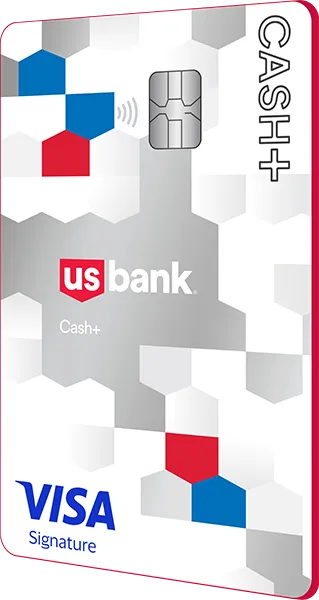
Cash+ offers that possibility through categories such as home utilities and TV, internet and streaming. The important details sit between the bill and the card: how the merchant is classified, whether you selected the category and what the payment actually costs.
In our shared household, a focused Cash+ setup adds $82.80 a year over a 2% card before any opening bonus. That is useful money. It also puts a sensible limit on how much work or extra cost the setup should require.
Our take: a bills card with a few necessary habits
Our recommendation: Consider Cash+ for recurring purchases in two categories you can use consistently, especially eligible household bills paid through a qualifying channel. Verify the first posted rewards and keep the required quarterly selection routine. Current Cash+ offer and categories
- Good fit if: You have recurring qualifying bills, can select categories each quarter and want to earn more without changing what you buy.
- Consider another card if: Billers charge substantial card fees, a card payment removes a valuable discount or you want one earning rule without quarterly maintenance.
- The tradeoff: The shared household's $2,760 of eligible 5% bills adds $82.80 over a 2% baseline. That is $6.90 a month before any added bill-payment costs.
We like a narrow job for this card. A high utility rate does not make its ordinary 1% purchases competitive with a suitable 2% fallback. Let the card handle the categories it improves and keep the rest simple.
The category choices need to match the actual bills
Cash+ lets you choose two 5% categories and one 2% everyday category under its current program. Home utilities and TV, internet and streaming are separate 5% choices. Cellphone providers are another separate choice; they do not automatically belong to either of the first two. Category list and restrictions
That separation creates a practical decision. A household with a large electric bill and modest phone bill might choose utilities and internet/streaming. A household with a large family cellphone plan could find the phone category more useful, provided card payment does not cost it a discount.
The 2% everyday choice can be eligible groceries, gas and EV charging, or restaurants. Check the current definitions, including excluded merchants. A supermarket-owned fuel station or wholesale-club purchase may not qualify the same way as an ordinary standalone merchant.
We would list the actual billers, their monthly amounts and any payment fee before picking categories. The choice that looks largest on the statement is not necessarily the choice with the best net result.
Rewards and fees at a glance
| Feature | Reviewed unsecured Cash+ Visa Signature offer |
|---|---|
| Two selected categories | 5% on the first $2,000 of combined eligible purchases each quarter |
| One selected everyday category | 2% on eligible purchases in the selected category |
| Other eligible purchases | 1% |
| Eligible travel-center bookings | 5% on qualifying prepaid air, car and hotel reservations booked through U.S. Bank's Travel Center |
| Annual fee | $0 |
| Welcome offer | $200 after $1,000 of eligible purchases in the first 90 days |
| Introductory purchase and transfer APR | 0% for 15 billing cycles; eligible transfers within 60 days |
| Later purchase and transfer APR | 17.74%–27.99% variable in the reviewed pricing |
| Transfer fee | 5%, minimum $5 |
| Foreign transaction fee | 3% |
Cash advances have separate pricing, including a 30.49% variable APR in the reviewed disclosure and transaction fees. Ordinary and ATM advances generally have a 5% fee with a $10 minimum; convenience checks have a $5 minimum. Late or returned payments can cost up to $41. Check the exact application disclosure for current costs. Full pricing
This review concerns the unsecured Cash+ card, not its secured counterpart. Approval, credit line and bonus eligibility are separate questions. The current offer excludes existing and previous Cash Rewards accounts, as well as upgrades. It does not give former cardholders a waiting period after which this bonus automatically becomes available. Bonus conditions
Our household calculation: the high rate has a limited job
Our $24,000 annual household selects home utilities and TV/internet/streaming for 5%, and groceries for 2%. Purchases are spread evenly through the year, and the illustrated billers and merchants qualify.
| Annual spending group | Amount | Rewards |
|---|---|---|
| Home utilities at 5% | $1,800 | $90 |
| Internet at 5% | $600 | $30 |
| Eligible streaming at 5% | $360 | $18 |
| Qualifying supermarkets at 2% | $4,800 | $96 |
| Other eligible purchases at 1% | $16,440 | $164.40 |
| Total | $24,000 | $398.40 |
The selected 5% categories total $690 per quarter, safely below the shared $2,000 cap. The ongoing one-card result is $398.40, compared with $480 on a suitable 2% card. The 1% fallback gives back more than the higher bills rate adds in this whole-wallet example.
With the reviewed $200 opening offer earned, first-year rewards become $598.40. The recurring year returns to $398.40 with the same spending and terms. We assign no spending to travel-center bookings and no guaranteed value to optional benefits.
Now give Cash+ only its $2,760 of annual 5% bills. Those earn $138. Put the remaining $21,240 on a 2% card, earning $424.80. The combined recurring result is $562.80, which is $82.80 more than the 2% card alone.
That is the version we prefer for this household. It improves the return without asking Cash+ to do a job its ordinary rate handles less well. Our one-card versus two-card guide compares the extra dollars with the extra account maintenance.
These results are modeled, not observed customer earnings. They assume eligible planned purchases, timely selections, no returns or payment fees, cash redemption and full payments preserving the purchase grace period. Your billers' actual fees and merchant classifications can change the answer.
A busy quarter can hit the cap even when the annual budget looks fine
The $2,000 quarterly limit is combined across the two selected 5% categories. It is not $2,000 for each one. A large seasonal utility bill or a planned purchase in another selected category can consume the allowance quickly. Cap and selection terms
Suppose one quarter contains $2,200 of eligible utilities and $300 in the other selected category. Of the $2,500 total, the first $2,000 earns $100 and the remaining $500 earns $5. Total: $105. Applying 5% to the whole amount would incorrectly produce $125.
If you can route the $500 above the cap to a suitable 2% fallback, it earns $10 instead, bringing the combined result to $110. The extra $5 is modest, but the same habit prevents larger errors when several purchases compete for the allowance.
Unused space in a quiet quarter does not make a later quarter's cap larger. Forecast large bills by quarter rather than dividing an annual total by four and assuming the timing will cooperate.
Quarterly selection is part of using the card
Without the required selection, purchases that otherwise could receive the higher rate earn the ordinary 1% under the program rules. In the $2,500 quarter above, that would be $25 rather than $105. Missing the selection costs $80 in that illustration.
You can select starting 45 days before a quarter. Choose at least five days before it starts to earn from day one; closer or midquarter selections take three business days to become effective. Midquarter selections do not cover earlier purchases, and choices already made lock five days before the quarter begins. We would select early and save the confirmation. Selection timing
If you forgot altogether, the program allows a first selection until five days before the current quarter ends. Last quarter's choices do not reactivate automatically. Once active, eligible purchases use their transaction dates to determine the reward quarter, even if they post later. Category FAQ No retroactive rewards
If another person uses the account, keep the rule short. “These two bills go here; everything else goes on the fallback” is easier to maintain than a long list of possible exceptions.
The first month is a useful check. If a bill earns 1% instead of the expected 5%, investigate the category and payment channel before letting the same assumption run for a year. A payment processor can transmit different merchant information from the underlying service provider.
Check fees and lost discounts before moving a bill
A 5% reward rate does not mean card payment saves 5% of the bill. The merchant's processing fee and any lost discount belong in the calculation too.
Suppose a $1,000 bill carries a 3% card-processing fee. If the full $1,030 charge qualifies at 5%, the card earns $51.50 and the fee costs $30. Net savings versus a fee-free payment method are $21.50, not $50. If only the $1,000 bill earns rewards, the net savings would be $20.
If the processor's transaction earns only 1% on the full $1,030, rewards are $10.30 against the $30 fee. The payment costs $19.70 more than the fee-free route. Qualification and fees are separate tests, and both must work.
Phone-bill discounts can be even more decisive. A hypothetical $200 monthly bill earns $10 at 5%, but losing a $20 autopay discount leaves you $10 behind each month before any other costs. Some providers restrict discount-eligible payment methods; check your own plan. Example provider's AutoPay rules
The bill-payment fee guide covers the math, while the utilities and recurring-bills guide helps sort the categories. We would move a bill only after both checks support the change.
Cash redemption and expiration deserve a place in the routine
Statement credits and deposits to eligible U.S. Bank accounts receive the advertised cash value. Gift cards, Real-Time Rewards and other choices can differ. You do not need a U.S. Bank deposit account to use a statement credit. Minimum amounts can vary by route, so check the Rewards Center for your redemption. Cash+ program rules
The rules allow up to seven business days for deposits to eligible U.S. Bank checking or savings accounts and six to eight weeks for statement credits to be applied. Redeem ahead of when you need the value; do not count on a reward request settling a bill due today.
Cash rewards expire at the end of the calendar month 36 months after the billing cycle in which they were earned. That makes periodic redemption sensible, especially for a specialist card that generates modest amounts each month.
Our household's focused bills use earns $11.50 a month on average before any bonus. There is little reason to let several years of that value sit unused just because the card stays on autopay.
A statement credit lowers the balance but does not count as the required minimum payment. Redeem before closing the account: subject to applicable law, the program forfeits accumulated rewards when you or the bank closes it. Payment and closure rules
The opening offer and borrowing terms should support your budget
The reviewed $200 offer requires $1,000 of eligible purchases within 90 days. Our focused bills alone average $230 a month, so roughly three months of those bills would not reach $1,000. That does not mean the card is unsuitable. It means the opening offer requires a separate, realistic plan for other eligible purchases you already intended to make.
Do not add unnecessary purchases to fill the gap. You may be able to route an existing planned expense temporarily, then return to the focused bills routine. Read the eligibility exclusions and posting rules before assuming a bonus will arrive. The current offer says it is credited within one to two billing cycles after qualifying, subject to account conditions. Welcome-offer footnote
The 0% introductory APR also has an end date. A $3,000 transfer with a 5% fee creates $3,150 to repay. Across 15 payments, that would require $210 per payment, but the actual billing dates and transfer timing may leave fewer payments. Minimum payments remain due, and ordinary variable pricing applies afterward under the agreement.
We would keep debt repayment ahead of rewards optimization. A larger cash-back rate on bills does not repair a budget that needs the credit line to cover recurring shortfalls.
Which alternatives deserve a look?
| Alternative | Consider it when | Main difference to investigate |
|---|---|---|
| An available Elan Max Cash Preferred partner-bank offer | Utilities and selected categories are the main job | Exact bank offer, category carryover, redemption and pricing |
| A suitable flat 2% card | You want no quarterly selection | Lower reward on qualifying selected bills, stronger ordinary fallback |
| Venmo Credit Card | You prefer automatic category ranking | Which category finishes first, qualifying bill definitions and redemption |
| U.S. Bank Smartly | You already have a suitable qualifying bank setup | Balance requirements and exclusions from enhanced rewards |
An Elan offer can be a relevant comparison, but use the exact partner bank's available application and rules rather than treating every similar-looking card as the same offer. Example current partner-bank product Elan program rules
For Cash+ itself, the decision is practical: two useful categories, a reliable quarterly reminder and bill payments that remain economical. When those pieces fit, the card can earn extra money from ordinary household expenses. Our main cash-back comparison helps decide whether that specialist role belongs in your wallet.
Frequently asked questions
Is the $2,000 cap per selected category?
No. It is the combined quarterly spending allowance across the two selected 5% categories. Eligible spending above it earns the ordinary rate.
Does a cellphone bill count as home utilities?
Cellphone providers are a separate selectable category under the current program. Check the issuer's list, your biller's classification and any lost payment discount before selecting it.
Does paying a bill online guarantee the higher rate?
No. The merchant category and information transmitted through the payment channel determine qualification. A third-party processor can change how the transaction is classified.
Do Cash+ rewards expire?
Yes. They expire at the end of the calendar month 36 months after the billing cycle in which they are earned. Account closure can forfeit them sooner, so redeem periodically.
Should Cash+ be my only card?
Compare the entire budget. Our example earns $398.40 using Cash+ alone, versus $480 on a suitable 2% card. Using Cash+ only for qualifying selected bills and the 2% card elsewhere produces $562.80 before fees or opening offers.
How we evaluated this card
We reviewed the issuer terms and sources linked below and compared modeled, planned household purchases at documented cash-redemption values. Examples distinguish introductory offers from ongoing value and show relevant caps, exclusions and costs. They are illustrations, not personal card-use claims or approval predictions.
Product, category rules and linked pricing checked September 15, 2026.
Sources & references9 sources
The issuer terms and other references behind this article.
- U.S. Bank Cash+ offer, categories and reward disclosures
- U.S. Bank Cash+ current application pricing
- T-Mobile AutoPay eligibility and discount rules
- U.S. Bank Cash+ program rules and redemption
- U.S. Bank category selection opening, lock and effective-date rules
- U.S. Bank midquarter selection and nonretroactive rewards rules
- Cash+ selection deadline, transaction dates and program FAQ
- Fulton Bank Visa Max Cash Preferred current product
- Elan Max Cash Preferred standard card program rules