In this article
There is something appealing about a card that does not ask you to remember which grocery store, which quarter or which checkout button to use. Buy what you already planned to buy, pay the statement, and collect the same ordinary rate.
Active Cash makes that case well. Our illustrative household puts $2,000 a month on a card and earns $480 a year at 2%. Compared with a 1.5% card, that is another $10 a month for the same purchases. It will not transform the household budget, but it is a useful improvement that does not create a new shopping routine.
The harder question is whether it improves the wallet you already have. If you own another suitable 2% card, Active Cash's ordinary rewards are mostly familiar territory. If you are starting from scratch or regularly losing rewards to category exclusions, the simplicity has more to offer.
Our take: a dependable starting point for everyday spending
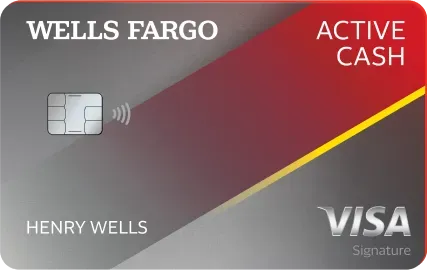
Our recommendation: Put Active Cash on the shortlist when you want one card for a broad mix of ordinary purchases. It also gives a category card a sensible partner: use the specialist where it earns more, then let Active Cash handle the rest. Current product offer
- Good fit if: You pay statements in full, prefer steady rewards and make most card purchases with merchants that do not trigger a foreign transaction fee.
- Consider another card if: You already have a suitable 2% card, frequently pay foreign merchants, or need a borrowing solution more than a rewards upgrade.
- The tradeoff: You gain a simple routine but give up the higher rates that some cards offer on particular spending. The right comparison is the extra annual dollars you would actually earn.
We would not open a second nearly identical card just because its ordinary earning rate sounds attractive. Start by checking the card already in your wallet. Moving from 1% to 2% on $24,000 adds $240 a year; moving from 2% to 2% adds nothing before offers, benefits and costs.
Active Cash rewards and fees at a glance
| Feature | Reviewed offer |
|---|---|
| Ordinary rewards | Unlimited 2% cash rewards on eligible net purchases |
| Annual fee | $0 |
| Welcome offer | $100 after $500 in net purchases posting within the first three months |
| Introductory APR | 0% for 12 months from account opening on purchases and qualifying balance transfers |
| Ongoing purchase and transfer APR | 18.74%, 24.74% or 28.74% variable, depending on creditworthiness |
| Transfer fee | Within 120 days: 3%, minimum $5; afterward, up to 5%, minimum $5 |
| Foreign transaction fee | 3% of each transaction converted to U.S. dollars |
The direct product page checked September 15 displays the $100 offer. Offers vary by acquisition channel, so another page or a mailed invitation may show something different. Match the bonus, spending deadline and pricing to the application you actually intend to use. Wells Fargo offer Application rates and rewards terms
Cash advances, late payments and other account activity can carry additional charges. Those are not purchases that earn ordinary cash rewards. The no-annual-fee label addresses one cost of ownership, not every possible cost of using credit.
Where the flat rate earns its keep
The useful thing about 2% everywhere is that it covers the purchases a category card can leave behind: the plumber, a new winter coat, the pet-food order and the supermarket that your other issuer treats as a superstore. Eligible purchases receive the same ordinary rate; the merchant must still accept the card. Earning rules
On a $120 grocery purchase, that is $2.40. A $700 appliance earns $14. A $50 eligible recurring charge earns $1. There is no need to make those purchases larger to make the math work. Returns and credits reduce net spending and can reverse rewards.
This is particularly helpful when your shopping changes. A card optimized for one store can be excellent until you move, switch supermarkets or stop paying for a membership. A flat-rate card requires less rethinking when the household routine changes.
It still matters what the merchant charges you. If a biller adds a card-payment fee, compare the total cost with the available payment alternatives. A predictable reward is useful only when the payment route leaves you ahead. Our guide to bill-payment fees shows the calculation.
What would your household earn?
Our shared example uses $24,000 of eligible purchases per year, spread evenly across the months. It includes groceries, dining, gas, shopping and ordinary bills. The spending is hypothetical and identical in each row below; it is not a national household average.
| Monthly eligible purchases | Annual purchases | Rewards at 2% | Extra over a 1.5% card |
|---|---|---|---|
| $1,000 | $12,000 | $240 | $60 |
| $2,000 | $24,000 | $480 | $120 |
| $3,000 | $36,000 | $720 | $180 |
The extra half percentage point is worth $5 for every $1,000 you spend. That is a useful way to judge whether a change of card is worth your time. Someone putting $500 a month on credit cards gains only $30 a year over 1.5%; someone putting $3,000 a month on cards gains $180.
There is no need to treat either decision as a competition to squeeze out every cent. A familiar account, a redemption method you like or one fewer statement to manage can reasonably influence a small-dollar choice.
For the $24,000 household, earning the reviewed $100 welcome bonus takes first-year rewards from $480 to $580. The second year returns to $480 if spending and terms stay the same. We exclude insurance claims and optional merchant offers, assume no fees or returns, use cash redemption, and assume full payments preserve the purchase grace period.
When a second card adds enough to matter
Suppose the same household spends $400 a month at qualifying supermarkets, $300 on dining and $30 on eligible streaming. Routing those $730 of purchases to Savor at 3%, while keeping other eligible purchases on Active Cash at 2%, adds one percentage point on that part of the budget. The improvement is $87.60 a year, or $7.30 a month. Savor categories
That creates a manageable rule: food and eligible streaming on Savor; the other purchases on Active Cash. It also shows the limit of the idea. The reward for remembering a second card is $7.30 a month in this example, not an unlimited pot of extra money.
If most groceries come from excluded superstores, the improvement shrinks. If you already have a grocery card with a different cap, the routing rule changes. Use your actual stores and the reward earned on a recent purchase, not merely the category name in your budgeting app.
The one-card or two-card guide helps decide whether the extra account earns its place. Active Cash works well as a baseline precisely because the comparison is easy to make: a specialist needs to improve on 2% after its own costs and restrictions.
Cellphone protection: check the bill before valuing the benefit
Active Cash includes supplemental cellphone protection for eligible damage or theft, subject to the guide's conditions. The reviewed coverage is up to $600 per approved claim, with a $25 deductible and a maximum of two paid claims per 12 months. Paying the full monthly wireless bill with the eligible card is part of qualifying for coverage. Benefit guide
The wireless bill charge must post to the card in the month immediately before the loss. Coverage begins on the first day of the calendar month after that charge posts and depends on continued eligible payments. A phone that simply disappears is treated differently from covered theft or damage. Cosmetic-only damage, electronic failure and other exclusions can matter. Notify the administrator within 60 days of the loss or as soon as reasonably possible, and submit the requested documents within 120 days; the guide warns that a late submission may prevent the claim from being honored. Save the bill, payment record and repair or replacement documents. Coverage and claim requirements
The biller's payment rules are just as important as the card's coverage. Imagine a $200 monthly phone bill. Paying with Active Cash earns $4. If that payment method loses a $20 monthly AutoPay discount, you are $16 behind each month, or $192 a year, before assigning any value to protection.
A hypothetical covered $300 repair could produce at most $275 after the deductible, subject to claim approval and other coverage. That possible payment is not guaranteed annual savings. If no covered loss occurs, the lost bill discount is still gone.
T-Mobile is one example of a carrier with specific AutoPay payment-method and early-payment rules. Its current policy includes an exception for its own qualifying card; do not assume an ordinary credit card receives the same treatment. T-Mobile AutoPay policy
We would check the existing phone bill, insurance and carrier discount before moving the payment. This benefit can be useful, but it does not automatically make the card the cheapest way to pay for wireless service.
Redeeming the cash should fit your routine
Wells Fargo offers account-credit redemption toward eligible credit or deposit accounts and other reward options. Its redeem-for-purchases feature requires an eligible purchase of at least $1 and enough rewards to cover the entire selected purchase. Redemption terms
That distinction is easy to miss. Having $8 in rewards does not let you cover part of a $25 transaction through that particular feature. You would need sufficient rewards for the full eligible purchase or use another available redemption method.
A statement credit reduces what you owe, but it does not replace the payment required on the account. Keep the payment routine separate from the reward-redemption routine. After redeeming, confirm both the credit and the remaining amount due rather than assuming the account has taken care of itself.
An existing Wells Fargo deposit relationship may make account-credit redemption convenient. It should not become a reason to open an unwanted fee-bearing bank account just to receive a small amount of cash back. Compare the redemption options actually available to you.
The introductory APR needs its own plan
The reviewed offer has a 12-month introductory period on purchases and qualifying transfers, measured from account opening. A balance transfer must satisfy the stated timing and fee requirements. The reward program and the borrowing promotion solve different problems. Introductory terms
For a planned $1,200 purchase made at the beginning of the promotion, 12 payments of $100 provide a simple starting point. A purchase made later has fewer payment dates before the promotion expires. Use the actual expiration date and leave room to finish early.
For transfers, add the fee before dividing by the payments remaining. A $3,000 transfer with a 3% fee starts at $3,090. Paying it over 12 installments would require $257.50 per installment, assuming those payments all fit inside the promotional window and no other activity changes the balance.
If the ongoing rate is likely to apply before you can repay, compare borrowing costs first. The extra cash from moving a purchase from 1.5% to 2% can disappear quickly in interest. Our rewards and interest guide explains why the payment plan deserves priority.
Which alternatives deserve a look?
| Alternative | Why consider it? | What changes the decision? |
|---|---|---|
| Citi Double Cash | Another route to 2% ordinary cash back | It earns in purchase and payment stages; redemption and transfer terms differ. |
| PNC Cash Unlimited | A flat-rate option for foreign purchases | Check its qualification and minimum-credit-line requirements and cash-redemption terms. |
| Capital One Quicksilver | A simple Capital One card without a foreign transaction fee | Its ordinary 1.5% rate earns less on the same domestic spending. |
| Capital One Savor beside a 2% card | More rewards on qualifying food and entertainment | Another account is worthwhile only if the extra dollars justify managing it. |
Double Cash is the closest ordinary-rewards comparison. If both cards fit, focus on the actual introductory offer, redemption experience and borrowing terms rather than treating their 2% headlines as different benefits. Our Active Cash versus Double Cash comparison works through the two-stage earning distinction. Citi terms
PNC Cash Unlimited and Quicksilver deserve attention if foreign purchases are common. Active Cash's 3% foreign transaction fee is larger than its 2% reward on an otherwise eligible purchase. The alternatives' application and reward conditions still matter. PNC product Quicksilver product
For a broader search, the cash-back card comparison connects those choices to the same household budget. The point is to find a reliable fit, not collect several cards that all do the same job.
Should you get Wells Fargo Active Cash?
We like Active Cash for the reader who wants to stop thinking about categories and still earn a useful ordinary return. It is especially convincing when the existing card earns only 1% or 1.5% and most purchases are domestic.
We would be less enthusiastic if you already have a suitable 2% card or expect to use it heavily with foreign merchants. Cellphone protection and introductory offers can affect the choice, but each needs its own calculation.
Before applying, compare the offer in front of you with your current card. Estimate the annual improvement, check how you will redeem it, and confirm the payment routine. If the gain is worthwhile and the account fits how you manage money, Active Cash has a straightforward job to do.
Frequently asked questions
Does Active Cash earn 2% at Walmart or warehouse clubs?
Eligible purchases receive the ordinary flat rate when the merchant accepts the card. There is no separate supermarket classification requirement for that rate. Merchant payment fees can still reduce the net value.
Do I need a Wells Fargo checking account?
The reviewed card application does not require a checking account to earn purchase rewards. An eligible deposit account is one redemption route. Check the credit-account alternatives if you do not bank with Wells Fargo. Application and redemption terms
Is the welcome bonus $100 or $200?
The direct offer checked September 15, 2026 is $100 after $500 of qualifying net purchases post within three months. Another channel can have a different offer. The terms attached to the application control. Current direct offer
Does a rewards statement credit count as my payment?
No. Make the required payment separately and check the remaining statement balance. Redeeming rewards is not a substitute for the account's payment obligations.
Can an existing Wells Fargo cardholder switch to Active Cash?
Wells Fargo describes product switches for eligible primary or secondary Visa cardholders. A switch does not receive a new-card reward bonus or new introductory APR under the product page's explanation. Eligibility for a switch and eligibility for a new application are different questions. Wells Fargo switching guidance
How we reviewed it: We analyzed issuer terms and modeled the same planned purchases across card options. This is not firsthand card testing. Calculations exclude interest and optional benefits unless the example explicitly includes them. Actual eligibility, pricing and reward treatment depend on the application and account terms.
Sources & references8 sources
The issuer terms and other references behind this article.
- Wells Fargo Active Cash product and rewards disclosures
- Wells Fargo Active Cash application rates, fees and rewards terms
- Capital One Savor Rewards offer and category definitions
- Wells Fargo Active Cash Guide to Benefits
- T-Mobile AutoPay eligibility and discount rules
- Citi Double Cash product and rewards terms
- PNC Cash Unlimited product and cash redemption conditions
- Capital One Quicksilver Rewards product