In this article
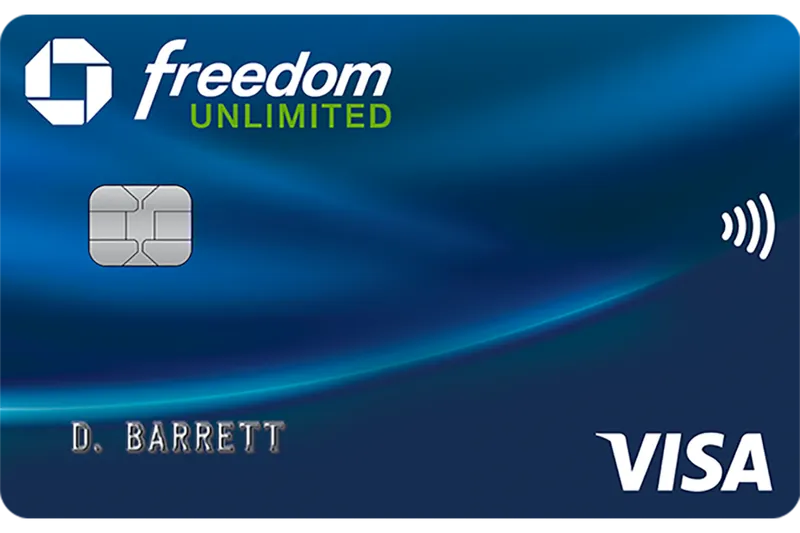
The name makes the everyday rate sound like the whole story. It is only part of it. Freedom Unlimited combines 1.5% on ordinary purchases with 3% on eligible dining and drugstores, plus a separate higher rate for eligible Chase Travel bookings.
That mix can be useful. The real question is whether your larger categories are the ones receiving the lift. A household can enjoy takeout every week and still spend much more on groceries, bills, gas and general shopping.
In our $2,000-a-month example, Freedom Unlimited earns $417.60 a year before the welcome bonus. A flat 2% card earns $480 on exactly the same purchases. The $62.40 gap is not enormous, but it is enough to challenge the assumption that a few higher-rate categories automatically produce a better everyday card.
Our take: a good fit for the right spending mix
Our recommendation: Consider Freedom Unlimited when its permanent categories match a substantial part of your actual spending and you value a simple Chase rewards routine. Compare the whole budget with a flat 2% card before making it your default. Current Chase offer
- Good fit if: You spend meaningfully at qualifying restaurants and drugstores, prefer consistent categories and pay statements in full.
- Consider another card if: Supermarkets, gas, utilities and general shopping dominate the budget, or foreign purchases are common.
- The tradeoff: You receive higher rewards on selected purchases, while many ordinary purchases earn half a percentage point less than a 2% alternative.
An existing Chase relationship can make another Chase account convenient, but convenience and reward value are separate considerations. You do not need a travel-points strategy to judge the cash-back setup in this review.
Freedom Unlimited rewards and fees at a glance
| Feature | Reviewed offer |
|---|---|
| Annual fee | $0 |
| Dining and drugstores | 3% total on eligible purchases |
| Chase Travel | 5% total on travel purchased through Chase Travel |
| Other eligible purchases | 1.5% |
| Welcome bonus | $200 after $500 in purchases in the first three months |
| Introductory purchase and transfer APR | 0% for 15 months from account opening |
| Ongoing purchase and transfer APR | 18.49%–27.99% variable |
| Transfer fee | 3%, minimum $5, in the first 60 days; then 5%, minimum $5 |
| Foreign transaction fee | 3% |
The current direct product page checked September 15 confirms the main rewards, $200 offer and introductory period. The linked pricing disclosure governs fees and eligibility for the actual application. Different application channels can have different offers. Product and bonus terms Pricing and fees
The rates in the table are totals. A 3% dining purchase does not also receive another 1.5% ordinary reward. Fees, cash advances and balance transfers are not ordinary reward-earning purchases.
What we like about the permanent categories
Freedom Unlimited gives restaurant and drugstore spending a consistent place in the wallet. You do not need to activate a new quarterly category to earn its ordinary dining or drugstore rate. That makes it easier to plan than a card whose most attractive rate follows a changing calendar.
Dining includes eligible takeout and delivery services under Chase's terms. That can make the benefit useful for an ordinary weeknight meal, not just a special restaurant visit. A $60 eligible dinner earns $1.80 at 3%, compared with $1.20 at 2%. The incremental gain is 60 cents. Category definitions
The drugstore category can also be useful for planned purchases at qualifying merchants. But a higher reward rate is not a reason to move a purchase to a more expensive store. Paying an extra $3 for something in order to earn another 30 cents leaves you behind.
Merchant classification still controls category treatment. A restaurant inside a larger business or a payment routed through an intermediary may not receive the treatment you expect. If a recurring purchase is central to your card choice, check its posted reward rather than judging from the name on the storefront.
The one-third test: when does it beat 2%?
For a comparison using only the 3% and 1.5% rates, more than one-third of your purchases must qualify for 3% to beat a flat 2% card. At exactly one-third, the ordinary rewards tie. This calculation excludes portal travel so the everyday spending decision stays clear.
Think of the rates as a trade. On a 3% purchase, Freedom Unlimited gains one percentage point over the 2% card. On a 1.5% purchase, it gives up half a percentage point. You need one dollar at the higher rate for every two dollars at the lower rate just to balance that trade.
| Monthly card budget | Dining and drugstore spending needed to tie 2% | What happens above that level? |
|---|---|---|
| $1,500 | $500 | Freedom Unlimited earns more under these two-rate assumptions |
| $2,000 | About $666.67 | The advantage grows with additional qualifying 3% spending |
| $3,000 | $1,000 | More than this amount must qualify to exceed the flat 2% result |
These are decision thresholds, not spending goals. If you currently spend $300 a month on dining and $20 at drugstores, the answer is not to order more food. It is to choose a card that fits the purchases already in your life.
Portal travel can change the result, as can fees, offers or different redemption choices. Separate those factors so an occasional trip does not obscure the return on the other eleven months of ordinary spending.
What happens in our household example?
Our shared household spends $24,000 a year on cards. It includes $3,600 of eligible dining and $240 at drugstores, with no Chase Travel purchases. That leaves $20,160 at the ordinary rate.
| Part of the annual budget | Spending | Freedom Unlimited rewards |
|---|---|---|
| Eligible dining | $3,600 | $108 |
| Drugstores | $240 | $7.20 |
| All other eligible purchases | $20,160 | $302.40 |
| Total | $24,000 | $417.60 |
A flat 2% card earns $480, making Freedom Unlimited $62.40 behind for the year. That is $5.20 a month. The result is specific to this household's spending, not a judgment that the card is always worse.
For a contrasting $2,000 monthly budget with $900 in qualifying dining and drugstores, Freedom Unlimited earns $27 on those purchases and $16.50 on the other $1,100. The $43.50 total beats the 2% card's $40 by $3.50 a month, or $42 a year.
Those two examples show why the ratio matters more than enthusiasm for one attractive category. A card can be a good match for a restaurant-heavy budget and a weaker match for a household with larger supermarket and general-bill spending.
The examples are modeled. Purchases are planned, eligible and identical between options. We assume cash redemption, no returns, fees or interest, and full payments that preserve the purchase grace period. Optional benefits and speculative travel values are excluded.
Would it work better beside another card?
Freedom Unlimited can act as a selective card for dining and drugstores beside a 2% fallback. On the shared household's $3,840 of annual category spending, the extra percentage point adds $38.40 a year over using the 2% card for everything.
That is $3.20 a month. If you already own Freedom Unlimited and can remember the category rule, using it this way may be easy. If you are considering a new account solely for that improvement, the small gain deserves an honest look at the extra work.
A different specialist could cover more of your spending. Savor, for example, adds qualifying supermarket and entertainment categories that may matter more than drugstores in some households. Freedom Flex shares permanent dining and drugstore rewards while adding activated rotating categories, with a lower ordinary fallback. Their conditions differ, so compare the categories you will actually use. Savor terms Freedom Flex terms
Our one-card or two-card guide treats manageability as part of the decision. A second account that adds a few dollars should not create a payment routine you struggle to follow.
The welcome bonus and introductory APR are separate benefits
The reviewed direct welcome offer is $200 after $500 of purchases in the first three months. If our household is eligible and earns it, first-year rewards become $617.60. The following year returns to $417.60 with the same spending and terms. Welcome-offer conditions
That opening bonus can outweigh an ordinary-reward difference in year one. A competing card may also have an offer, however, so compare both opening years and both ongoing years. Do not compare one card's bonus-enhanced result with another card's ongoing result and call the difference permanent.
The introductory 0% APR lasts 15 months from opening on purchases and qualifying transfers in the reviewed offer. Transfer fees still apply. A planned $1,500 purchase at the beginning of that period could be divided into 15 payments of $100, assuming all those payments fall before the promotion expires. A later purchase has less time.
Build the payment schedule before making the purchase. If the expense does not fit the repayment budget, a welcome bonus and a temporary rate do not solve that problem. The welcome-bonus planning guide keeps the spending deadline separate from the bill-payment deadline.
Redeeming rewards and using Chase Travel
Chase tracks Freedom Unlimited rewards as Ultimate Rewards points. The reviewed cash value is one cent per point, with no minimum cash-redemption amount. At that value, 20,000 points equal $200. You can redeem cash as a statement credit or an electronic deposit into an eligible Chase account in the United States. The statement-credit option lets you use the cash value without opening a Chase deposit account. Rewards do not expire while the account remains open under the program's conditions. Cash-redemption rules
Other redemption arrangements can produce different results, but we do not assume an additional paid card or a speculative transfer value in a cash-back review. A reader who wants cash should be able to evaluate the card without learning a separate travel system.
For eligible Chase Travel bookings, compare the final price and booking conditions with direct alternatives. A 5% reward on a more expensive reservation can still leave you paying more. Cancellation rules, support and the exact eligible booking matter alongside the reward.
Use cash redemptions in a way you can track, and keep them separate from required payments. A reward balance is useful only if you redeem it and still meet the account's payment obligations.
Which alternatives deserve a look?
| Alternative | When it may fit better | Main compromise |
|---|---|---|
| A suitable flat 2% card | Most purchases fall outside dining and drugstores | You may give up a higher category rate or different introductory benefit |
| Chase Freedom Flex | Activated quarterly categories match your planned spending | The ordinary fallback is 1%, and the quarterly bonus has a cap |
| Capital One Savor | Qualifying groceries, dining and entertainment dominate | Other eligible spending ordinarily earns 1% |
| Capital One Quicksilver | You want simple Capital One rewards for foreign purchases | Its ordinary 1.5% rate lacks Freedom Unlimited's permanent dining/drugstore lift |
For the closest Chase comparison, read Freedom Flex versus Freedom Unlimited. The amount of rotating-category spending you can use without changing your budget decides much of that choice.
For an everyday baseline, the Active Cash review explains the appeal and limits of 2%. For a food-focused specialist, the Savor review uses the same household and shows why a second-card role can be stronger than using it for everything.
Quicksilver's lack of a foreign transaction fee can matter if foreign purchases are frequent. Freedom Unlimited's reviewed 3% fee can outweigh its ordinary rewards on those purchases. Confirm the actual product variant and terms when comparing. Quicksilver product Chase pricing
Should you get Chase Freedom Unlimited?
We would consider it for a reader who wants permanent Chase categories, makes meaningful restaurant and drugstore purchases and can use the introductory offer responsibly. Its predictable categories are easy to understand.
We would first compare a flat 2% card if supermarkets, gas and general shopping take most of the budget. In our example, the simpler rate wins by $62.40 a year before offers. For a different spending mix, Freedom Unlimited can win instead.
Check a few recent statements, total the purchases likely to qualify for 3%, and apply the one-third test. That small amount of work gives you a much better answer than the card name or headline rate alone.
Frequently asked questions
Does Freedom Unlimited require quarterly activation?
Its permanent dining, drugstore, eligible Chase Travel and ordinary rates do not use the Freedom Flex quarterly activation system. Separate merchant offers or promotions can have their own requirements. Rewards terms
Does 3% dining stack on top of 1.5%?
No. The advertised 3% is the total for qualifying dining purchases. Adding another 1.5% would overstate the reward.
Does it earn 3% at supermarkets?
Ordinary supermarket purchases generally use the 1.5% fallback under the reviewed permanent categories. A specific temporary offer would need separate verification. Food bought at a supermarket is not automatically a restaurant purchase.
Who can receive the welcome bonus?
The reviewed offer excludes current holders of this product and previous holders who received its new-cardmember bonus within the past 24 months. Chase still makes the credit decision. Check the eligibility language on your application. Offer restrictions
Is it a good card for carrying a balance?
Evaluate borrowing costs and the payoff plan first. The temporary purchase promotion can help with a planned expense, but the ongoing variable APR can outweigh cash-back rewards if a balance remains. Our interest guide shows that tradeoff.
How we reviewed it: We evaluated issuer terms and modeled household spending at cash-redemption value. This is not firsthand card testing. Examples hold purchases constant and exclude optional benefits unless stated.
Sources & references5 sources
The issuer terms and other references behind this article.