In this article
The PayPal button is easy to recognize. How often you actually use it is harder to remember accurately.
That is the gap this review needs to close. The card can be useful for an established checkout habit, but “I shop online a lot” does not tell us whether the higher rate applies. The merchant must offer the right payment route, you must select this card as the funding source, and the transaction must qualify.
Before adding the account, look at actual purchases from a few recent months. If most were ordinary card-number transactions, the 1.5% fallback deserves as much attention as the advertised 3%.
Our take: count the qualifying purchases before choosing the card
Our recommendation: Consider PayPal Cashback Mastercard when a meaningful amount of planned spending already goes through qualifying PayPal checkout at a competitive price. Compare it with a 2% everyday card and with another online-shopping specialist. Current product
- Good fit if: You use PayPal regularly, can select the correct funding card and like redeeming through the linked account.
- Consider another card if: Most purchases happen outside PayPal, another household member makes much of the spending as an authorized user, or foreign purchases are common.
- The tradeoff: On our $3,000 annual qualifying-checkout example, using this card only for that job adds $30 over 2%, or $2.50 a month. Decide whether that gain earns another account a place.
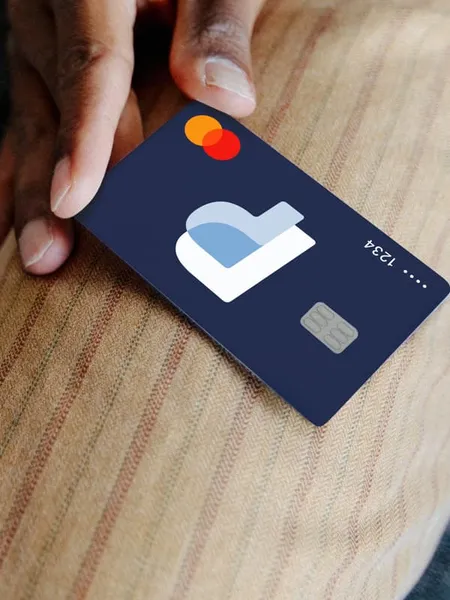
This review covers Synchrony Bank's PayPal Cashback Mastercard, including the World Mastercard version where issued. PayPal Credit, the debit card and a PayPal Balance account are different products.
PayPal Cashback Mastercard rates and costs at a glance
| Feature | Reviewed terms |
|---|---|
| Annual fee | $0 |
| Qualifying primary-user PayPal transactions | 3% |
| Other eligible purchases | 1.5% |
| Ordinary purchase-reward cap | None in the reviewed rules |
| Purchase APR when opened | 18.49%, 30.24% or 33.24%, depending on account type; variable thereafter |
| Foreign transaction fee | 3% |
| Paper-statement charge | $1.99 in a billing cycle meeting the stated conditions |
| Public cash welcome bonus in our model | $0; no unverified personalized offer included |
The pricing disclosure says a limited number of applicants are expected to receive the two lower account types. The lowest displayed APR should not be treated as the typical outcome. No general introductory purchase APR is included in this review. Current pricing agreement
The paper fee applies when the balance exceeds $2.50 and a monthly paper statement is sent, even if an electronic copy is also provided. Electronic-only delivery avoids that particular charge under the reviewed terms. Cash advances carry a 33.24% variable APR and a 5% fee with a $10 minimum. Late payments can cost up to $40 and returned payments up to $41; a 34.24% variable penalty APR may apply under the agreement's conditions. Full rates and fees
PayPal states that an approved application results in a hard credit inquiry; being able to apply through an existing PayPal account is not approval. The card and PayPal account must remain properly linked and in good standing. Application information
The one-third threshold explains the everyday-card decision
The card earns half a percentage point less than 2% on ordinary purchases, but one percentage point more on qualifying 3% purchases. It needs enough of the latter to make up for the former.
For every $2 outside PayPal, the 1.5% rate trails 2% by one cent. A $1 qualifying PayPal purchase earns one cent more than 2%. That is why one-third of total eligible spending needs the higher route to break even, before other differences.
| Qualifying PayPal purchases within a $24,000 year | Other eligible purchases | Total PayPal card rewards | Difference from $480 at 2% |
|---|---|---|---|
| $0 | $24,000 | $360 | −$120 |
| $3,000 | $21,000 | $405 | −$75 |
| $6,000 | $18,000 | $450 | −$30 |
| $8,000 | $16,000 | $480 | $0 |
| $12,000 | $12,000 | $540 | +$60 |
| $24,000 | $0 | $720 | +$240 |
The final row shows the mathematical upper end for this fixed budget, not an assumption that every household expense can go through PayPal. The useful row is the one your actual merchants and payment habits support.
Our common household routes $2,400 of eligible online retail and $600 from other planned spending through PayPal, without counting either purchase group twice. That $3,000 earns $90. The other $21,000 earns $315, for $405 total.
The calculation assumes equal purchase prices, no returns or payment fees, eligible primary-user transactions and full on-time payments preserving the purchase grace period. It excludes personal transfers, optional offers and unverified welcome bonuses. First-year and ongoing rewards are the same in this base case.
A specialist role avoids the weak fallback–but price the extra work
Keep the qualifying $3,000 on PayPal Cashback Mastercard and give the other $21,000 to a suitable 2% card. Rewards become $90 plus $420, or $510.
The pair earns $30 more than one 2% card alone. It also earns $105 more than putting the entire household budget on the PayPal card. Both comparisons are true, but they answer different questions.
The first is the useful measure when deciding whether to add this card to a wallet that already earns 2%. The second measures the benefit of improving a weak fallback. We would not describe the entire $105 as value created by opening the PayPal card.
| Annual qualifying 3% purchases | Extra over a 2% fallback on that spending | Monthly equivalent |
|---|---|---|
| $1,200 | $12 | $1 |
| $3,000 | $30 | $2.50 |
| $6,000 | $60 | $5 |
| $12,000 | $120 | $10 |
If another account feels like a nuisance for $2.50 a month, keeping the simpler arrangement is reasonable. If the qualifying purchases are substantial and the checkout routine is effortless, the specialist role becomes more persuasive.
The one-card versus two-card guide uses this same incremental approach. The aim is to give each card a job that improves the wallet you actually have.
The funding source and the person paying matter
For the qualifying online rate, choose PayPal and fund the purchase with the Cashback Mastercard. Typing the card number directly into a retailer's form is an ordinary card transaction, not automatically a 3% PayPal transaction. Earning rules
On a $200 order, 3% returns $6 and 1.5% returns $3. If you expected the higher route, that difference is worth checking in the posted reward. A saved checkout preference can make the routine easier, but verify which account is selected before confirming a purchase.
Authorized-user purchases currently earn 1.5%. PayPal's public page says an authorized user cannot add the card to their own PayPal account. The reward agreement's conditional language about a possible future capability is not evidence that it is available today. Authorized-user restriction User-specific reward rules
Suppose a household expects $8,000 at 3%, the one-card break-even amount in the table. If $2,000 of that spending instead earns 1.5% as authorized-user purchases, rewards fall by $30, from $480 to $450. The same household spending no longer matches 2%.
That does not mean one person should take over every purchase to satisfy a spreadsheet. It means the recommendation should reflect how the household actually shops. Convenience and responsibility for the account belong in the decision too.
A higher reward cannot rescue a worse checkout price
Compare the final total, including delivery charges, discounts and payment-method fees. A one-percentage-point advantage over 2% provides only $1 of extra reward on a $100 purchase at the same price.
Consider an item available for $100 through a qualifying PayPal route or $97 through another merchant using a 2% card:
- The $100 purchase earns $3, leaving $97 after rewards.
- The $97 purchase earns $1.94, leaving $95.06 after rewards.
The lower-priced purchase is $1.94 cheaper after rewards despite its lower percentage. Store reliability, return terms and shipping still need to be comparable, but the example shows why the reward should come after the price check.
The same applies to card-payment fees on bills. A qualifying route can still leave you behind when the fee is larger than the reward. Our payment-fee guide walks through those comparisons.
Foreign and paper fees can absorb a small advantage
A 3% foreign transaction fee is substantial beside a 1.5% or 3% reward. On a hypothetical $1,000 foreign purchase earning the ordinary 1.5%, the reward is $15 and the fee is $30. The result is $15 behind before currency-conversion differences or interest.
For regular foreign spending, compare a suitable no-foreign-fee card rather than expecting the PayPal brand or checkout button to remove issuer charges. The actual transaction and pricing terms control.
Paper statements deserve a smaller but equally concrete calculation. Twelve charged cycles at $1.99 total $23.88. Against the $30 annual benefit of our specialist pairing, that leaves only $6.12 before other costs.
If you prefer electronic delivery and reliably read it, avoiding that fee is straightforward under the reviewed terms. If you need paper, include its actual cost instead of presenting the card as costless because the annual fee is zero. Statement and foreign-fee conditions
Cash redemption runs through PayPal
Rewards generally become transferable approximately three days after eligible purchases. You initiate redemption, with at least $0.01 available. The linked card and PayPal accounts must be open and in good standing. Redemption rules
With a PayPal Balance account, transferred rewards can be used for eligible payments or moved to a linked bank account or debit card. Without that Balance account, the route is transfer to a linked bank or debit card. Check the chosen transfer's timing and any fee. Available reward uses
This is worth considering before applying if your preference is simply to click “statement credit” at the card issuer. The PayPal route may fit your habits well, but it is a different process.
A PayPal reward balance does not make your required credit-card payment for you. Keep the payment date and redemption routine separate. Under the agreement, closing PayPal or unlinking the card also closes the card account and can forfeit untransferred rewards, subject to applicable exceptions. Redeem eligible rewards before changing that connection; it is more consequential than removing an ordinary saved payment method.
We would treat the cash as part of the ordinary budget when it becomes usable. There is no need to turn a small reward balance into extra shopping just because it appears inside a payment app.
Personal transfers are outside this shopping model
The current reward agreement includes eligible card-funded sending to other PayPal users at 3%. That does not establish that a personal transfer is free or profitable. Cash-advance classifications are excluded from rewards and can bring separate fees and immediate interest; the account agreement also lists person-to-person transfers among cash-like transactions, subject to classification. Service fees are not reward-eligible purchases either. Check the specific route before sending money. Reward eligibility Transaction classification
This review models goods and services only. Do not add a reimbursement to the same restaurant purchase and count both as ordinary dining spending. The existing send-money guide covers transfer mechanics, while the fee guide addresses whether a payment route leaves you ahead.
Alternatives you can compare quickly
| If your priority is… | Compare… | What changes the recommendation |
|---|---|---|
| Automatic rewards on leading spending categories | Venmo Credit Card | Its 3%/2% ranking works by statement period; Other stays at 1% |
| Eligible online retail plus groceries and gas | Blue Cash Everyday | Separate category caps and merchant definitions, with a different cash-credit route |
| Amazon purchases with an existing Prime relationship | Prime Visa | Higher qualifying-store rewards, membership requirements and a weak general fallback |
| An ordinary 2% rate, including foreign use without that fee | PNC Cash Unlimited | Qualification, redemption and current offer conditions |
The PayPal-versus-Venmo comparison puts checkout share and category concentration beside each other. They are related brands with different reward jobs; familiarity with the apps does not make the cards interchangeable.
Frequently asked questions
Does PayPal Cashback Mastercard still earn 2% everywhere?
The current reviewed structure is 3% on qualifying PayPal transactions and 1.5% elsewhere. An older review using a 2% fallback will overstate today's ordinary earning rate.
How much spending needs the 3% rate to beat a 2% card?
Before fees and other differences, more than one-third of total eligible spending must qualify for 3%. Exactly one-third matches 2% in the simplified one-card calculation.
Will adding the card to Apple Pay make purchases earn 3%?
Not automatically. The higher online reward requires the qualifying PayPal-account route. Ordinary mobile-wallet use does not itself establish that route.
Do authorized users earn 3% through their own PayPal accounts?
The current supported arrangement does not allow authorized users to add this card to their own PayPal account, and their eligible purchases earn 1.5% under the reviewed rules.
Can the card charge a fee even with no annual fee?
Yes. Foreign transactions, qualifying paper-statement cycles and other account activity can create charges. Include the costs that apply to how you plan to use it.
How we evaluated this card
We reviewed the issuer terms and sources linked below and compared modeled, planned household purchases at documented cash-redemption values. Examples distinguish introductory offers from ongoing value and show relevant caps, exclusions and costs. They are illustrations, not personal card-use claims or approval predictions.
Product, pricing and rewards terms checked September 15, 2026.
Sources & references3 sources
The issuer terms and other references behind this article.