In this article
An Amazon order arriving at the door is not evidence that a credit card saved you money. It depends on whether the purchase was planned, the price was competitive and the reward replaced money you would otherwise have spent.
That is the sensible starting point for Prime Visa. The card can improve a routine you already have. It becomes less convincing when the reward is a reason to buy another item, move groceries to a more expensive store or keep a membership you would otherwise cancel.
There is also a small checkout choice worth getting right: paying with points can cost you the next purchase's rewards. We will show that math, along with the membership threshold and a simple two-card arrangement.
Our take: keep the shopping job specific
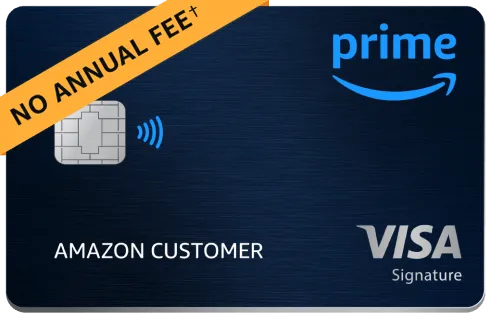
Our recommendation: Consider Prime Visa for qualifying Amazon and Whole Foods spending if you already have an eligible Prime membership. Compare the card with your current online-shopping rewards, then give ordinary purchases a suitable fallback. Current Chase offer
- Good fit if: You already use Prime, buy regularly through qualifying channels and want cash rewards rather than a travel-points project.
- Consider another card if: Prime itself is hard to justify, most shopping happens elsewhere or you need a broad everyday rate.
- The tradeoff: On $1,200 of eligible Amazon purchases, 5% earns $60. A 2% card earns $24, so the extra return from adding Prime Visa for that job is $36 a year, or $3 a month.
Someone spending $6,000 in the same qualifying channels has a different proposition: the improvement over 2% becomes $180. The right recommendation depends on those actual purchase dollars, not merely on having an Amazon account.
Prime Visa rewards, offer and costs at a glance
| Feature | Reviewed Chase Prime Visa |
|---|---|
| Annual card fee | $0 |
| Eligible Amazon.com, Audible, Whole Foods and Chase Travel purchases | 5% with eligible Prime membership |
| Eligible gas, restaurants and local transit/commuting | 2% |
| Other eligible purchases | 1% |
| Reviewed welcome offer | $150 Amazon Gift Card on approval for eligible new cardmembers |
| Purchase and transfer APR | 18.74%–27.49% variable |
| Foreign transaction fee | None |
| Standard Prime price used below | $139 annually or $14.99 monthly, before applicable tax |
The welcome gift is Amazon shopping value, not cash deposited into a bank. The reviewed offer is for eligible new cardmembers who do not currently hold Amazon Visa or Prime Visa. The gift card is loaded upon approval under the offer's conditions and cannot buy other gift cards. Offer details
The linked pricing lists transfer and cash-advance fees of 4%, with a $5 minimum. Cash advances have a separate 28.49% variable APR. Late and returned payments can each cost up to $39, and a penalty APR of up to 29.99% may apply. There is no general introductory purchase APR in this offer; particular Amazon purchases may offer separate financing choices, discussed below. Pricing and financing terms
This is the Chase-issued general-use Visa. Amazon's store-only credit products and business cards are different accounts. Match the name and issuer when comparing an application or an offer you receive.
First, decide whether Prime already earns its place
If you would keep Prime regardless of the card, the membership's incremental cost for this card decision can be $0. The reward becomes an additional benefit of an existing, useful relationship.
If you are buying membership mainly for the card, compare the extra reward with the full cost. Amazon Visa without eligible Prime generally earns 3% in the corresponding qualifying channels. Prime's additional reward is therefore two percentage points, rather than the whole 5%. A standalone Prime Video subscription does not qualify for this higher card rate. Prime and non-Prime reward structures
| Annual qualifying purchases | At 5% with Prime | At 3% without eligible Prime | Extra reward from Prime |
|---|---|---|---|
| $1,200 | $60 | $36 | $24 |
| $3,000 | $150 | $90 | $60 |
| $6,000 | $300 | $180 | $120 |
| $6,950 | $347.50 | $208.50 | $139 |
| $10,000 | $500 | $300 | $200 |
At the standard $139 annual membership price, $6,950 of eligible annual purchases covers that price through the incremental card reward alone. This simplified calculation excludes tax, other membership benefits and rewards on the membership charge itself. It is a decision threshold, not a spending goal. Standard membership pricing
Paying $14.99 for twelve months costs $179.88 before tax. Under the same assumptions, the threshold becomes $8,994. A discounted membership or useful non-card benefits can change the amount reasonably assigned to the card.
For our household's $1,200 in Amazon purchases, the extra 5%-versus-3% reward is only $24. That is a weak reason to buy a $139 membership by itself. It can still be a perfectly useful reward for someone who already wants the membership.
The whole-wallet result is less impressive than the Amazon rate
Our shared $24,000 annual budget includes $1,200 of qualifying Amazon spending, $2,400 of gas, $3,600 of dining and $600 of local transit. The remaining $16,200 does not qualify for those higher rates in this example.
| Purchase group | Annual spending | Modeled reward |
|---|---|---|
| Qualifying Amazon purchases at 5% | $1,200 | $60 |
| Gas, dining and local transit at 2% | $6,600 | $132 |
| Remaining eligible purchases at 1% | $16,200 | $162 |
| Total | $24,000 | $354 |
A suitable 2% card earns $480 on the same purchases. The difference is $126 in the flat-rate card's favor. Prime Visa has a valuable specialty, but its 1% fallback pulls down the full-budget result.
If Prime is independently useful, that $354 is the ordinary modeled reward before other costs. If a new $139 annual membership is purchased solely for the card, the result becomes $215 before tax. The reviewed $150 opening gift card can add up to $150 of first-year shopping value if it replaces planned purchases, but it stays separate from cash rewards and the recurring calculation.
We assume eligible planned purchases, no returns and full on-time payments preserving the purchase grace period. Cash redemptions use the documented value. Portal travel, optional promotions, insurance claims and non-card membership benefits contribute $0 to this base example.
The simpler role: Amazon here, ordinary purchases elsewhere
Use Prime Visa for the $1,200 qualifying Amazon purchases and a suitable 2% card for the remaining $22,800. The two cards earn $60 plus $456, or $516.
That is $36 more than the 2% card alone. It is useful, but modest. There is no reason to describe a $3 monthly gain as a financial transformation.
Now consider someone who already buys $4,800 of groceries at qualifying Whole Foods locations in addition to that $1,200 Amazon budget. Giving both groups to Prime Visa produces $300 on $6,000 of purchases. The remaining $18,000 at 2% produces $360, for $660 total.
That pairing adds $180 over a 2% card alone. The grocery store changes the card's job substantially, which is why we do not silently move every reader's supermarket spending to Whole Foods in the baseline.
Shopping prices still matter. If moving $4,800 of groceries raises their annual cost by more than the reward improvement, the move leaves you worse off. At a three-percentage-point advantage over 2%, those groceries add $144 in rewards. Compare actual food costs and preferences before changing stores to chase it.
The grocery-card guide starts with where you shop. The wallet guide helps decide whether one more routing rule is worthwhile.
The purchase channel determines the higher rate
An Amazon logo somewhere in checkout is not sufficient. The reward agreement excludes unrelated merchants using Amazon Pay, international Amazon retail sites and certain third-party Whole Foods transactions from the higher Amazon/Whole Foods category. Channel definitions
For a planned $100 item, the difference between 5% and a 1% fallback is $4. A shopper who assumes every Amazon Pay transaction earns 5% can overestimate rewards repeatedly without noticing a problem in the card's advertised rate.
Use the eligible Prime relationship associated with the correct Amazon.com account and card. Multiple shopping accounts or a changed linked card can complicate the earning status. Confirm the benefit in the account and examine an actual posted purchase after changing the setup.
Chase Travel's 5% requires the qualifying booking channel. It is not a promise of 5% on every hotel or airline charge. Compare the total booking price, cancellation terms and service arrangements before choosing a portal for a higher rate.
Temporary item offers can be worthwhile when they match a purchase already on your list. They are excluded from our recurring estimate because their availability and your need for the item are uncertain. “Ten percent back” on an unnecessary purchase still requires paying the other 90%.
Redeem cash separately when it preserves the next reward
The reviewed agreement values eligible cash redemptions at one cent per point. Cash routes include a statement credit and an electronic deposit into an eligible Chase account in the United States. The redemption flow can specify minimums or maximums, so check the option actually available. Cash redemption rules
Qualifying daily rewards post Sunday through Friday and are generally usable after that posting, with up to one additional day in the circumstances described by the agreement. That is much faster than an annual certificate, but it is still worth checking the available balance before planning a redemption.
Amazon also lets you use eligible points at checkout. That is convenient, but the amount covered by points is not a new purchase charged to the card.
Here is the practical difference on a planned $100 qualifying Amazon order:
| How you pay | New amount charged to the card | New reward at 5% |
|---|---|---|
| Use $100 of points at checkout | $0 | $0 |
| Charge $100, then separately redeem $100 of points as an available statement credit | $100 | $5 |
The second route preserves $5 of new purchase rewards, assuming the purchase and redemption qualify. Check the remaining amount due after a statement credit posts. Unless credits and payments since the statement closed cover that statement balance, Chase still requires the minimum payment or remaining statement balance, whichever is less, by the due date.
This is a small habit, not a reason to shop more. On $1,000 of purchases that would otherwise be fully paid with points at checkout, the same difference is $50. Redeeming thoughtfully makes the existing purchases work a little harder.
Points do not expire while the card remains open, but certain account problems can cause forfeiture. An ordinary closure for reasons outside those forfeiture conditions generally leaves at least 30 days to redeem. Check the actual account notice before closing, rather than leaving a balance behind. Point availability and closure rules
Financing can mean giving up rewards on that purchase
The linked pricing describes Equal Pay promotions for qualifying Amazon purchases. Those purchases do not earn percentage-back rewards. The offer determines the minimum purchase, installment period and other conditions, and the promotional installment becomes part of the required minimum payment. Equal Pay conditions
On a $600 planned item otherwise earning 5%, selecting no-reward financing gives up $30. You may decide that the actual financing offer is more useful, but the comparison should show the forgone reward.
Do not count both the $30 reward and the financing benefit on the same purchase when the offer requires choosing. Also distinguish a specific checkout promotion from carrying an ordinary balance at the card's purchase APR.
If you cannot comfortably repay the purchase under the available terms, a high reward percentage does not make it affordable. The rewards and interest guide shows how borrowing costs can overtake a purchase reward.
Purchase protection is worth knowing before something goes wrong
For a shopping card, protection on the item can matter more than another dollar of rewards. The linked benefit guide covers eligible purchases against specified theft or damage for 120 days, or 90 days for New York residents, subject to a $500-per-item limit and $50,000 account maximum. Coverage is secondary to applicable insurance; exclusions include consumables, unexplained disappearance and items still in a delivery carrier's care. Purchase-protection guide
Keep the receipt and card statement. If an item is stolen after delivery, the guide first requires a claim with the carrier or retailer. Notify the benefit administrator within 90 days of the loss and provide requested documents within 120 days, or as soon as reasonably possible. This is conditional protection, so we add no guaranteed payout to the reward model.
Alternatives you can compare quickly
| If you want… | Compare… | What may change the choice |
|---|---|---|
| Rewards across more qualifying online retailers | Blue Cash Everyday | Its eligible U.S. online-retail category has its own $6,000 annual cap and merchant rules |
| A checkout-based shopping specialist | PayPal Cashback Mastercard | Qualifying PayPal transactions earn 3%; the funding route, 1.5% fallback and fees matter |
| One broad everyday rate | PNC Cash Unlimited | A 2% rate without a foreign transaction fee, with different qualification and offer conditions |
| Food rewards across qualifying supermarkets and restaurants | Capital One Savor | Its categories may fit a broader food routine than one store relationship |
An existing Prime member with substantial eligible shopping may reasonably keep Prime Visa as a specialist. Someone spending little in those channels may prefer a card already in the wallet, especially if adding the account creates more work than the extra reward is worth.
Before applying, check the current gift-card offer, your Prime earning status and the cash-redemption route. At membership renewal, rerun the membership decision. The card should follow a useful shopping routine rather than become a reason to preserve an unwanted subscription.
Frequently asked questions
Is Prime Visa a 5% cash-back card everywhere?
No. It offers 5% in specified qualifying channels with eligible Prime membership, 2% in its gas, restaurant and local-transit categories, and 1% on other eligible purchases.
Is the welcome gift card the same as $150 cash?
No. It is Amazon Gift Card value under the reviewed approval offer. Count only the value of planned purchases it replaces, and keep it separate from recurring cash rewards.
Does Amazon Pay at another website earn the Amazon rate?
Not simply because the merchant uses Amazon Pay. Unrelated merchants using that service are excluded from the higher Amazon category in the agreement.
Should I get Prime only for the card?
Compare the additional two percentage points over the corresponding non-Prime reward with the membership cost. At $139 annually, the simplified threshold is $6,950 in eligible annual purchases before tax and other adjustments.
Can I earn 5% and use Equal Pay on the same order?
The reviewed Equal Pay promotions do not earn percentage-back rewards. Read the checkout choice and compare the financing terms with the reward you give up.
How we evaluated this card
We reviewed the issuer terms and sources linked below and compared modeled, planned household purchases at documented cash-redemption values. Examples distinguish introductory offers from ongoing value and show relevant caps, exclusions and costs. They are illustrations, not personal card-use claims or approval predictions.
Product, pricing, membership and reward-program terms checked September 15, 2026.
Sources & references5 sources
The issuer terms and other references behind this article.